
An investigation into comments on Clean Girl influencers’ TikTok videos, related to the impossibility of achieving the promoted aesthetic
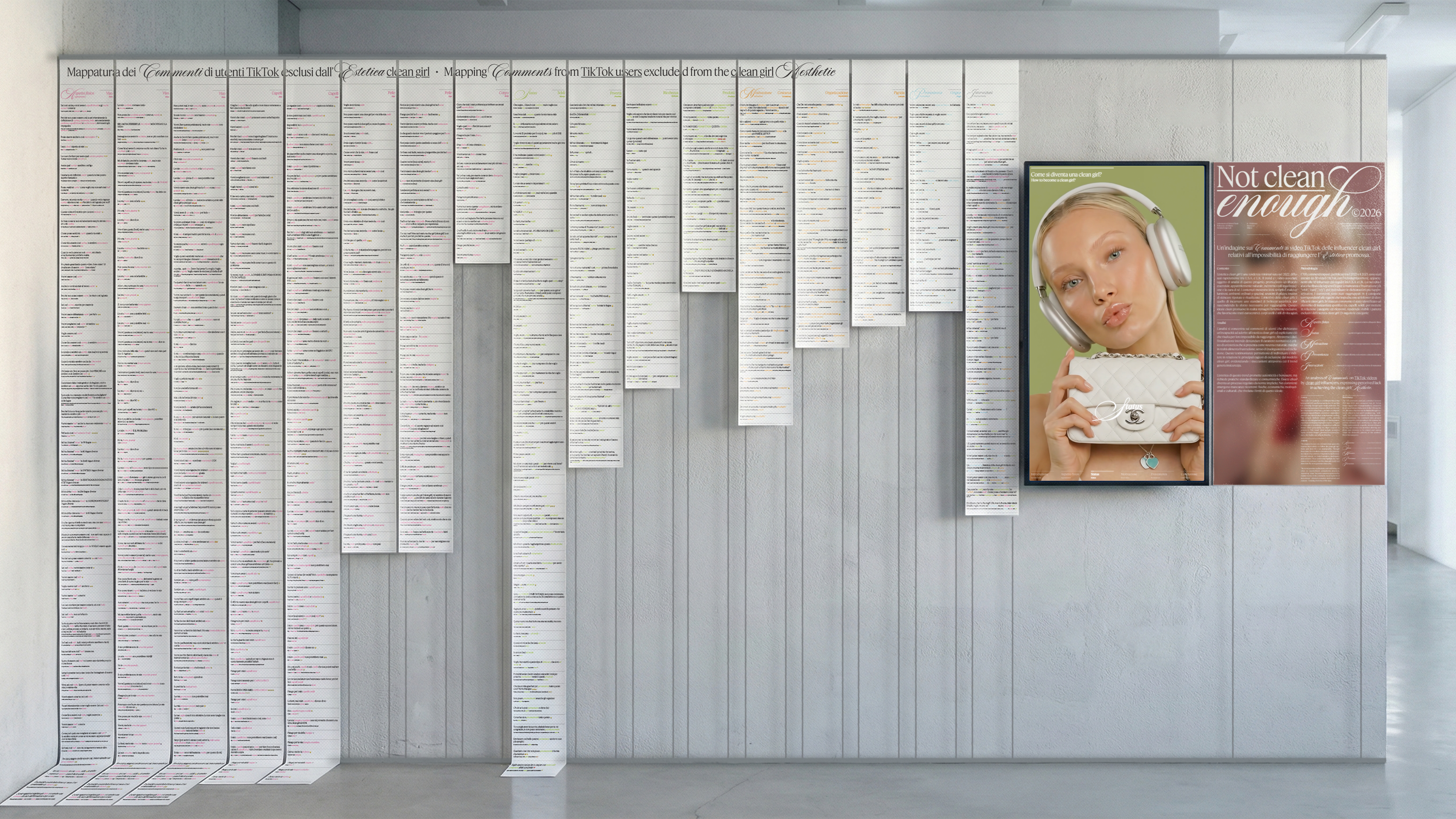
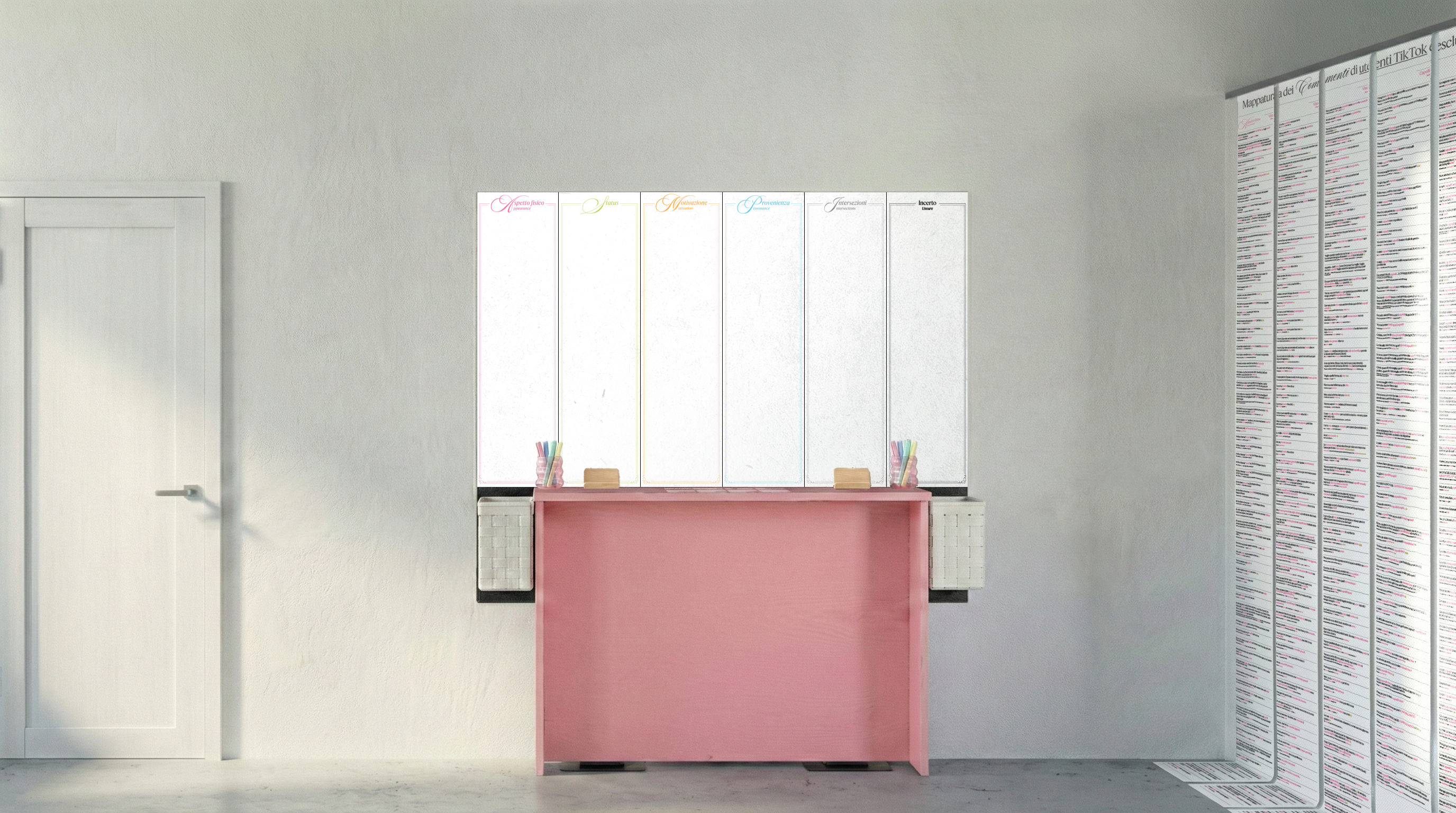
The project is an installation that analyzes the problems related to the clean girl aesthetic voiced by the users commenting the influencers’ videos, consisting of a physical display (a wall of printed comments) and a video.
The comments wall is made of 705 selected comments to TikTok videos published by clean girl influencers, which describe what users feel they lack in order to fit into the “clean girl” aesthetic.
The video aims to showcase and provide context for the comments displayed on the wall, allowing the audience to understand the trend's problematic origins before they become explicit. Initially, the clean girl archetype is presented, highlighting who these creators are, what they do, and the lifestyle they promote. For this reason, unlike the physical installation which lists the comments alone, the video incorporates visual and audio elements from content selected via the #cleangirlaesthetic. The ultimate goal is to introduce the clean girl phenomenon by presenting how the categories used to organize the comments on the wall originated.
The data comes from 30 TikTok videos with the hashtag #cleangirlaesthetic (2023-2025) from influencers in the US and UK. The comments were collected and manually classified into five categories (Appearance, Status, Motivation, Provenance, and Intersections) based on recurring traits. In the artifact, the comments are organized by category and tagged by an Insecurity Element, showing how the ideal of “clean” beauty, presented as natural and authentic, is in reality exclusive and linked to specific aesthetic, economic, and cultural standards, continuously reinforced by the imagery of influencers.
Artefact design
Datasets used for data categorization
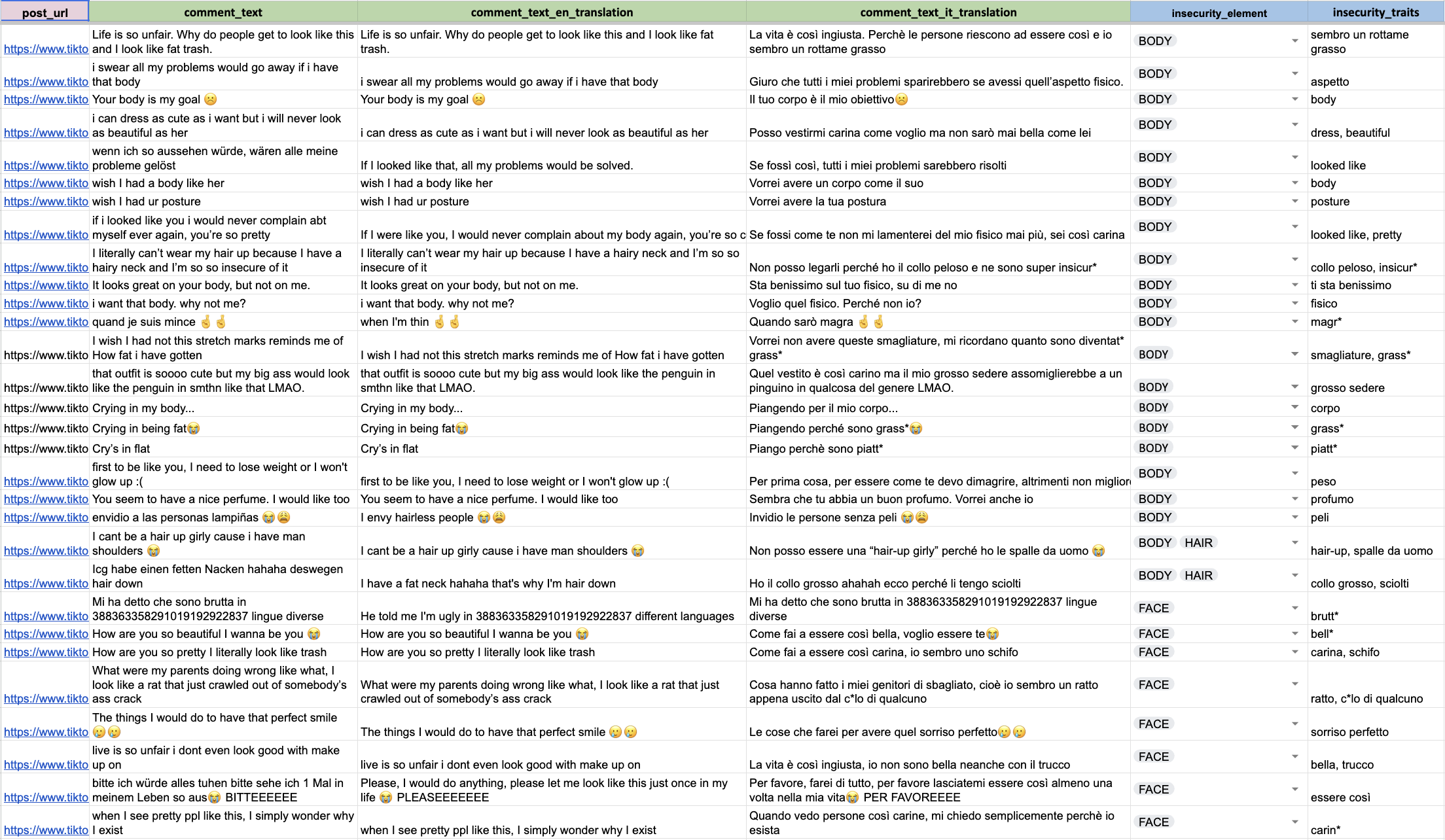
The Appearance section of the visualization dataset.
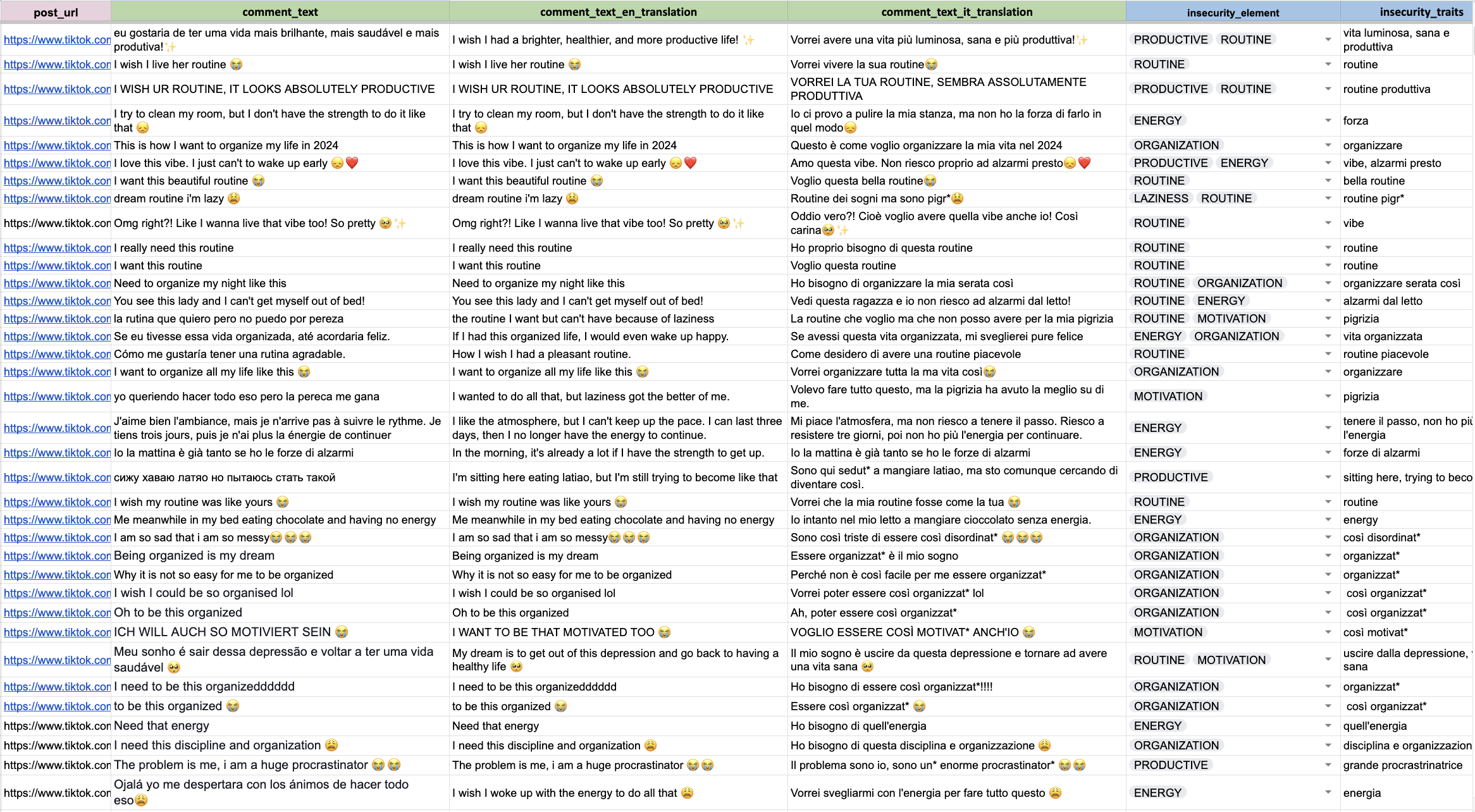
The Motivation section of the Evaluation Methodology dataset.
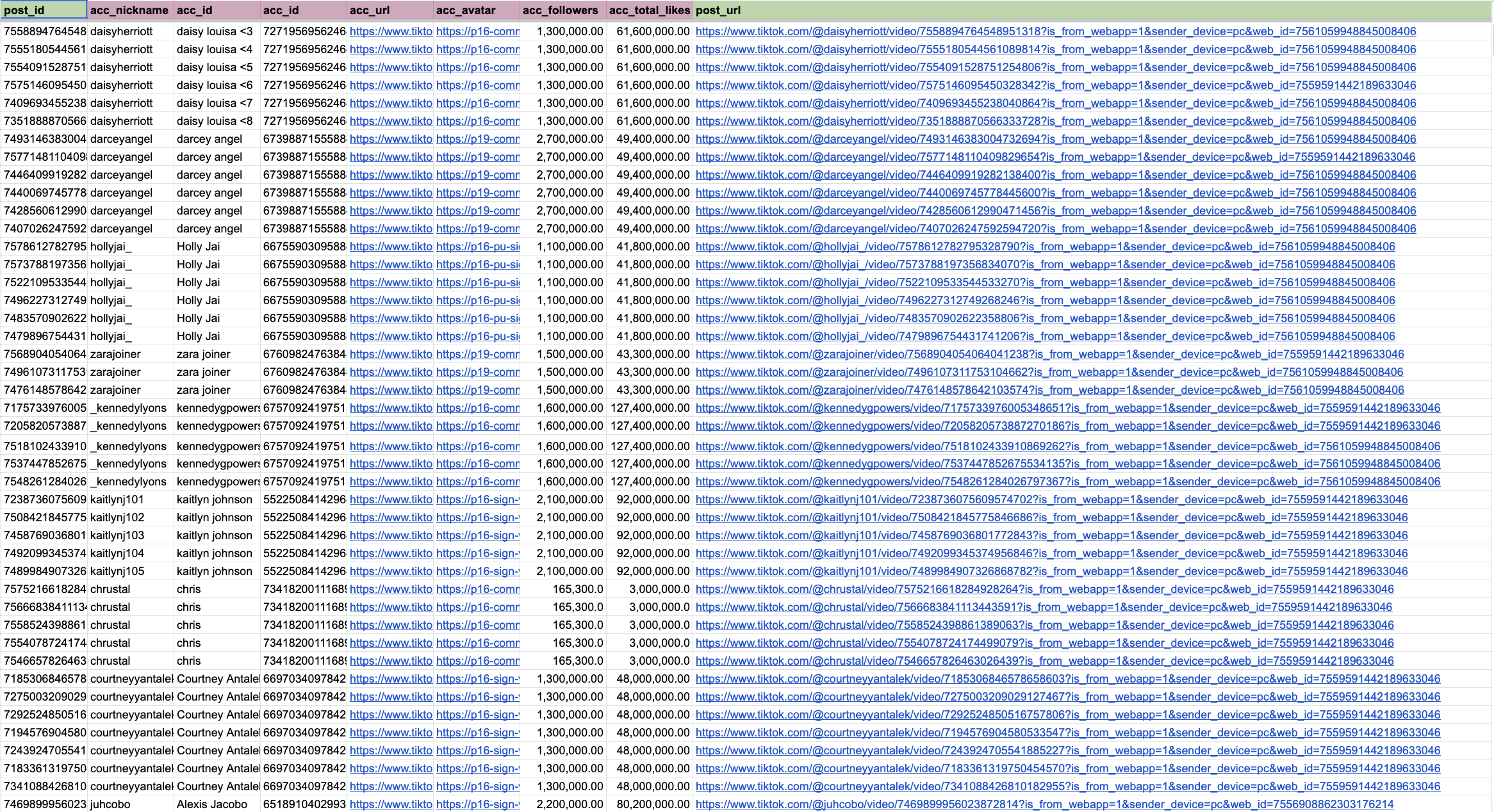
The video selection section of the dataset used for the introductory video.
The artefact displays 705 comments manually extracted from 30 TikTok videos by US/UK influencers, expressing the shortcomings perceived by users. Each comment was translated in Italian and English. We began with manual collection of the comments (which was simplified by looking for specific keywords expressing lack such as “I wish,” “can't,” “cry” to identify certain comments) and continued with the classification of each comment into five main Categories of Lack:
Appearance: concerns about physical appearance. For example: “I wish my skin was this perfect”; “If I were like you, I would never complain about my body again, you’re so cute”.
Status: issues related to economic and financial condition. For example: “You called me poor in thirty thousand languages”; “I was already feeling poor with so many products, then when she launched a Chanel soap I was sure that I am extremely poor”.
Motivation: behavioral and motivational issues. For example: “People with depression often struggle to find the motivation to bathe; we don’t all have the same privileges”; “I wish i could just look like this effortlessly”.
Provenance: difficulties related to origin or cultural background. For example: “I just want to be a white girl in Alabama”; “I wish I were white so I could be a clean girl”.
Intersections: comments that refer to more than one category. For example: “Oh to be white and blond”; “If I had this all money to spend, I think I could buy a whole new skin”.
Each comment was further categorized by an Insecurity Element (e.g., body, money, ...), identified by an Insecurity Trait (e.g skin, depression, lazy, ...). So, for example, the comment: “My dark circles ruin it all for me” is categorized in this way: Category: Appearance; Insecurity Element: face; Insecurity Trait: dark circles.
The wall of comments presents the 705 comments ordered first by main Category (from left to right) and inside each category by Insecurity Element, ensuring that all comments with a common theme (e.g., Appearance - BODY) are placed side by side.
The comments layout reflects the minimalist, essential, and orderly aesthetic of the “clean girl” (serif typography, pastel colors), with Italian as main language, the English translation smaller placed below it and the Insecurity Trait highlighted in italics and in the color of its respective category.
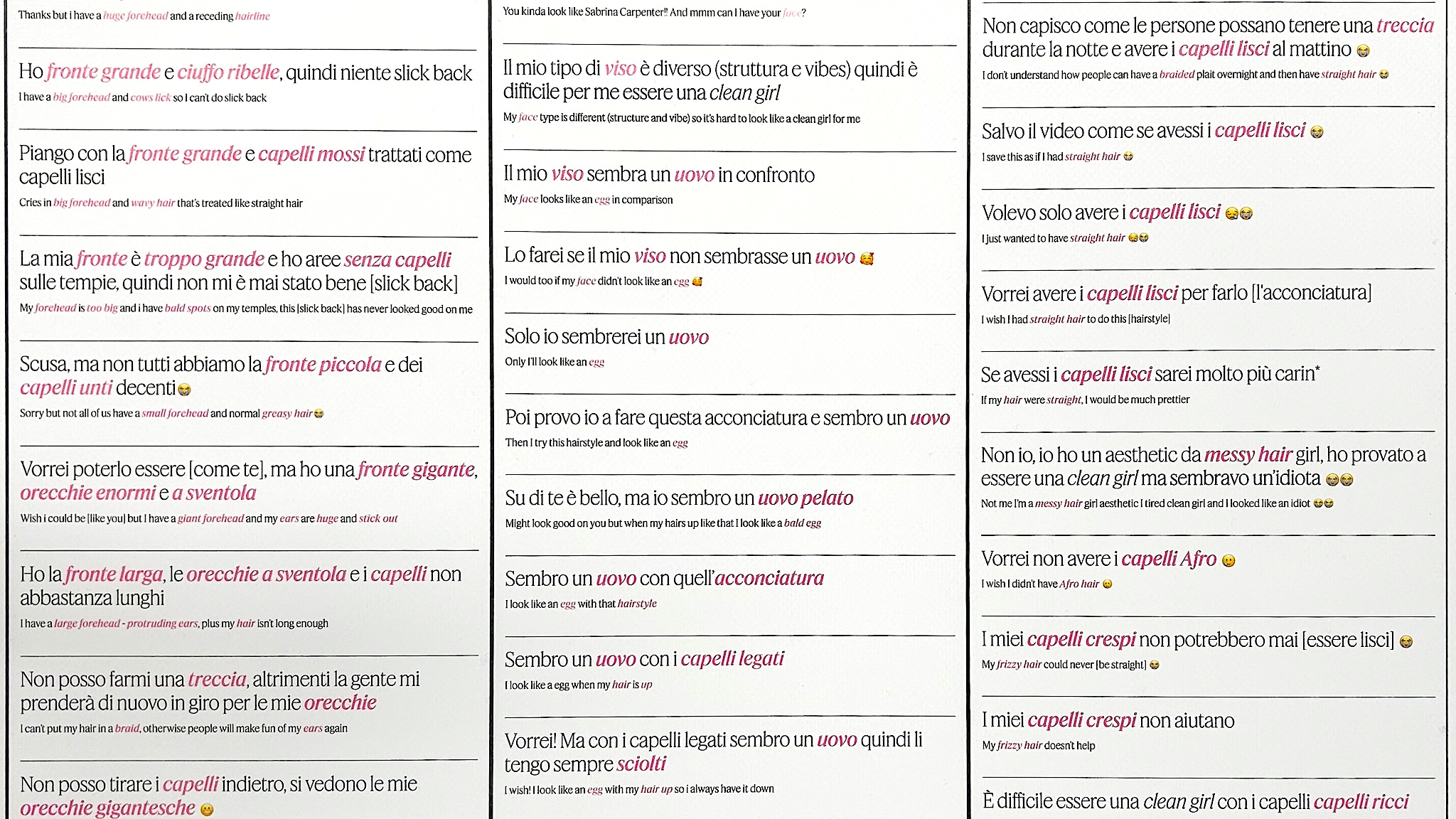
Close-up of three columns in the Appearance category, specifically the “face” and “hair” Insecurity Elements.
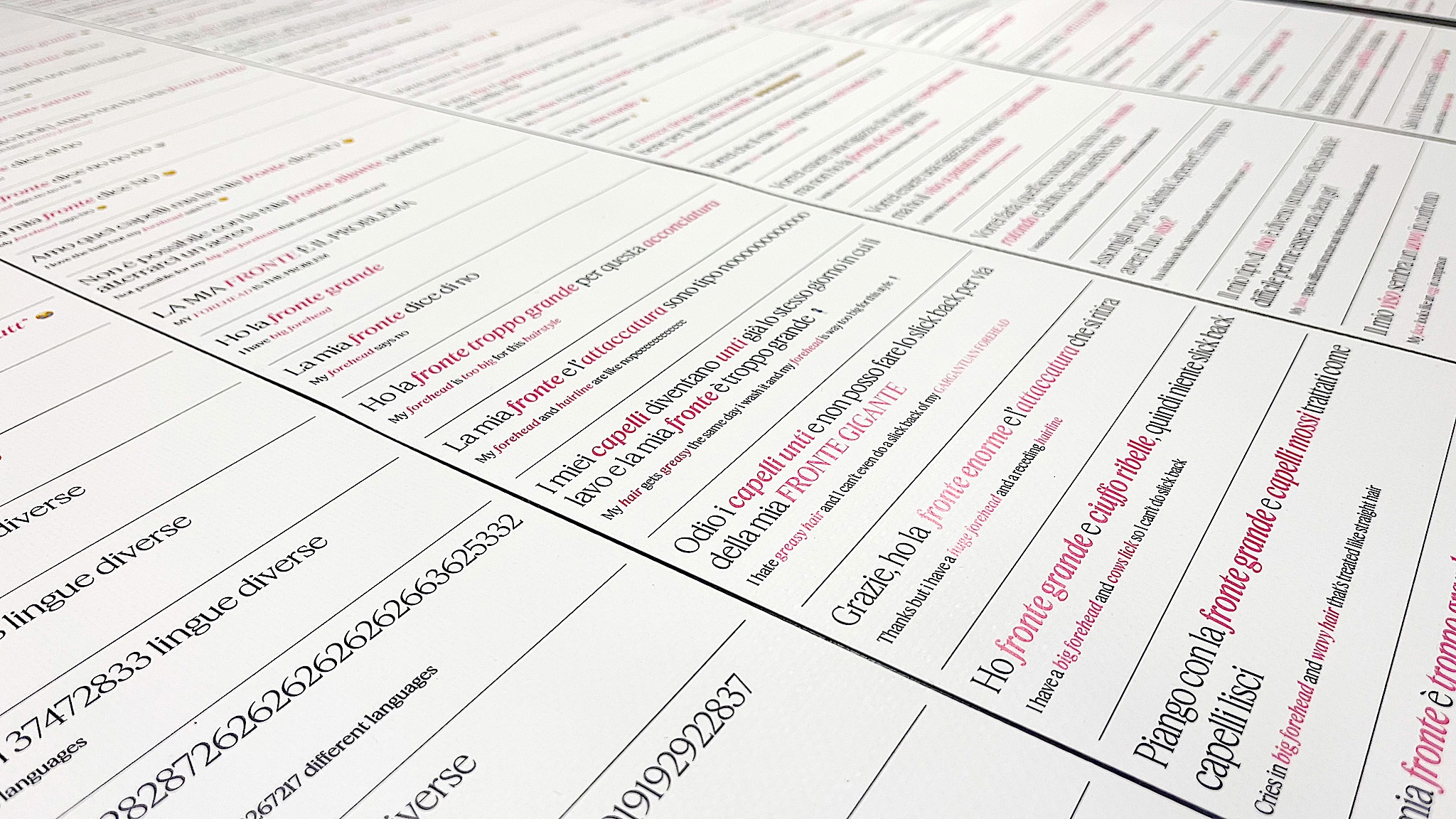
Perspective view from the side-by-side columns of the Appearance category.
The video was developed by integrating generative AI technologies, starting from an aesthetic analysis of the ten influencers selected for the research. Among these, Daisy Herriot (@daisyherriot) was chosen as the central figure as she is one of the influencers with the largest following and the one who most faithfully embodies the clean girl aesthetic; her face was therefore used as the basis for synthesizing the ideal image of the typical clean girl. Using Google Flow and Veo 3.1, five video contents were generated: a neutral introduction with a start timer and four thematic videos. Each clip strictly reflects the color palettes, actions, and props distinctive to the identified categories (physical appearance, status, motivation, and origin). The narrative is supported by a selection of clips extracted and deconstructed from the 30 original videos in the analysis, structured to answer guiding questions that accompany the user from the definition of the phenomenon to the data visualization.


