
An archive of claims about the carnivore diet and related rhetorical mechanisms, transcribed from YouTube and TikTok

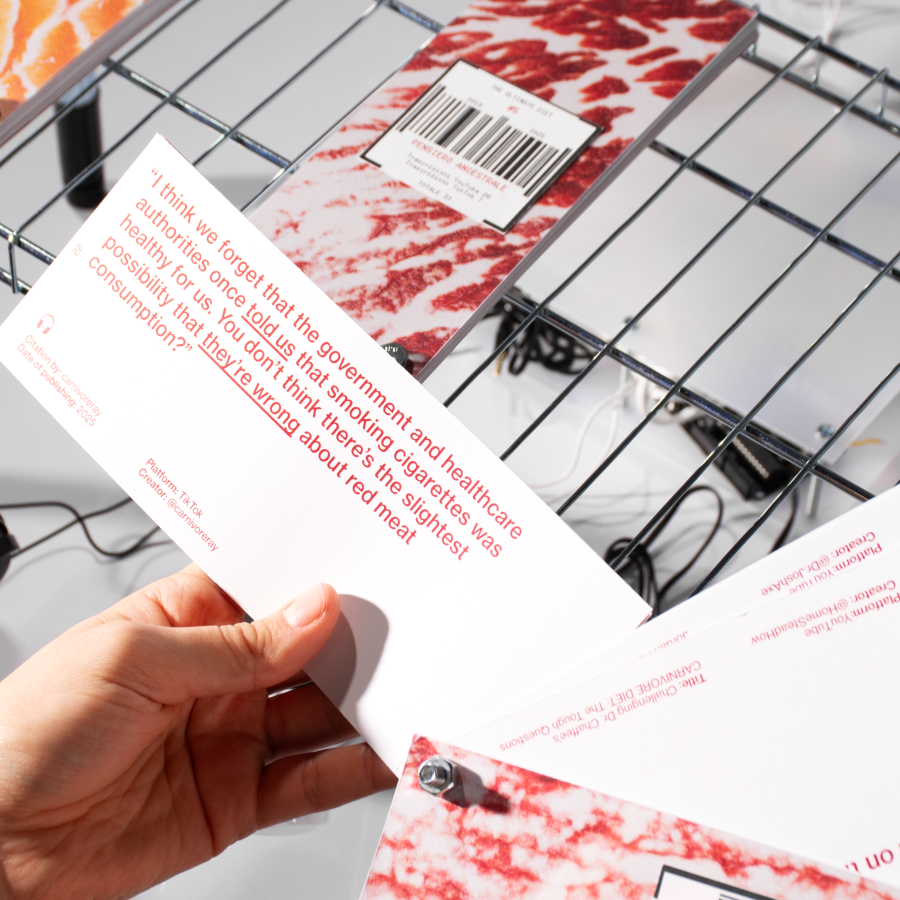
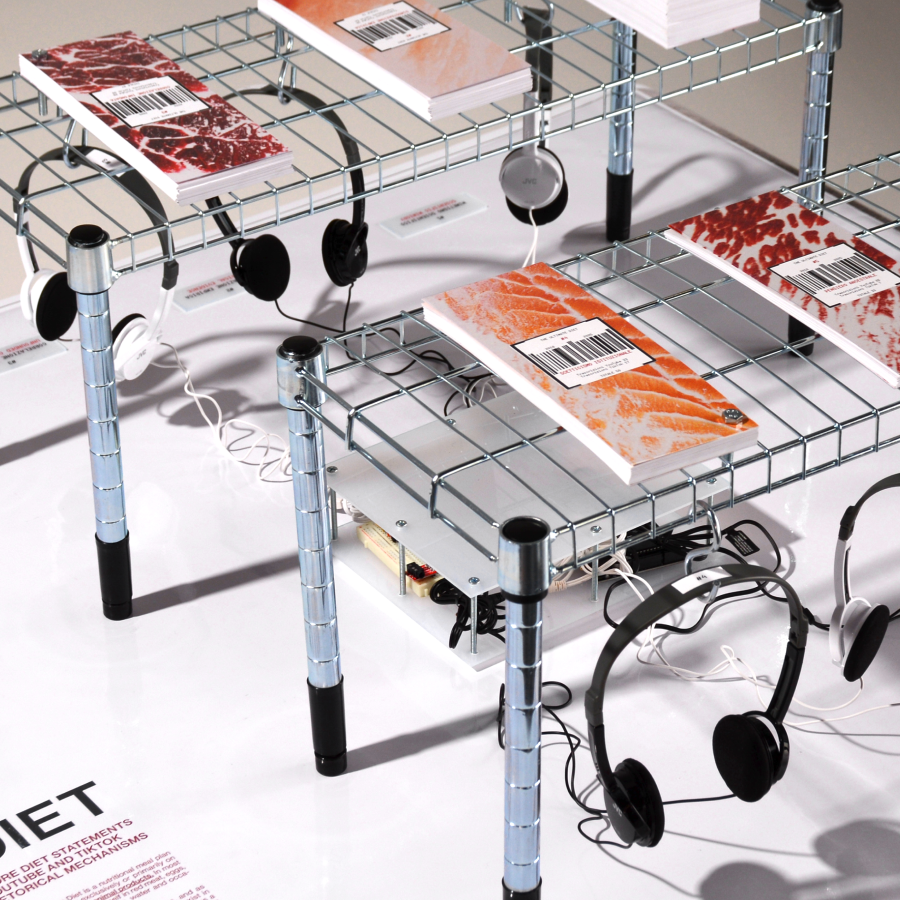
The project consists of 6 catalogs that organize video transcriptions from supporters of the carnivore diet on YouTube and TikTok into 6 rhetorical mechanisms. Rhetorical mechanisms are recurring patterns in this kind of discourse—such as common themes or figures of speech—used to build the credibility of the carnivore diet despite its fallacious nature. Some transcriptions are paired with headphones that play edited audio excerpts from the original videos.
The transcriptions were collected from TikTok (67 videos) and YouTube (30 videos), selecting the most engaging content (higher likes, comments, saves, and shares) between July 2018 and September 2025. Starting from 422 videos, transcriptions were collected manually and classified into six rhetorical mechanisms.
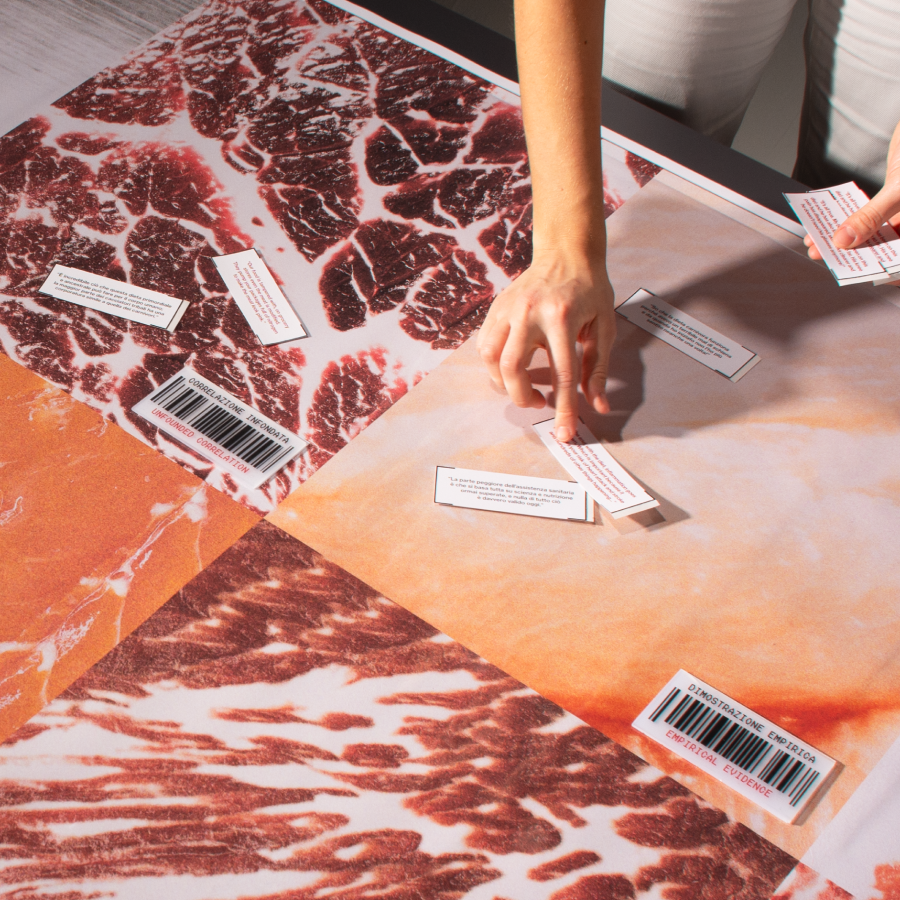
Within each catalog, transcriptions are sorted by recurring themes and words. Some entries also include modified audio clips. The project includes an evaluation moment: on the second table, a panel presents rhetorical mechanisms as frames in which users can place provided claims after identifying the corresponding mechanism.
Data design
The project focuses on the persuasive power of language. For this reason, most of the work was centered on text extraction, categorization, and organization.
We analyzed each video to identify moments where supporters made statements about the diet and transcribed those statements directly from the videos, starting from YouTube's automatic transcripts and refining them with Google Gemini, or manually transcribing shorter videos.
To organize content in the catalogs, we returned to the previously mentioned transcriptions, selected recurring words, developed thematic tags, and used these tags to classify each transcription within each mechanism.
We focused on language's persuasive capacities. For this reason, in visualizing our findings we did not optimize content into charts, models, and similar formats; instead, we developed a text-based project. Statements maintain a form very close to their raw state, extracted from real voices.
We created a different sheet for each rhetorical style, structuring each sheet into columns dedicated to specific information (author, channel, statement, year, etc.). The catalog was designed using Adobe InDesign data merge.
For audio sampling, we collected video transcriptions and used an LLM to identify moments where specific claims were made. Afterwards, we extracted specific audio fragments directly from the source videos. In this way, people can listen to the rhetoric through corresponding headphones connected to SD cards via an Arduino board.
Artifact design
Visually, the exhibition setup of the artifact recalls the aesthetic of a butcher shop. Each rhetorical mechanism is associated with a corresponding type of meat, and we included plastic materials and a metal grid that reference this visual language.
Finally, we tested different spatial arrangements through sketches and 3D modeling to identify the best way to guide users in reading, listening, and classification tasks using the catalog, headphones, and interactive panel.


