
An investigation into how pharmaceutical legitimacy is built on TikTok without formal verification
The installation investigates how credibility and pharmaceutical legitimacy are constructed on TikTok through content about Ozempic, a prescription drug for type 2 diabetes that is increasingly framed online as a lifestyle and weight-loss solution.
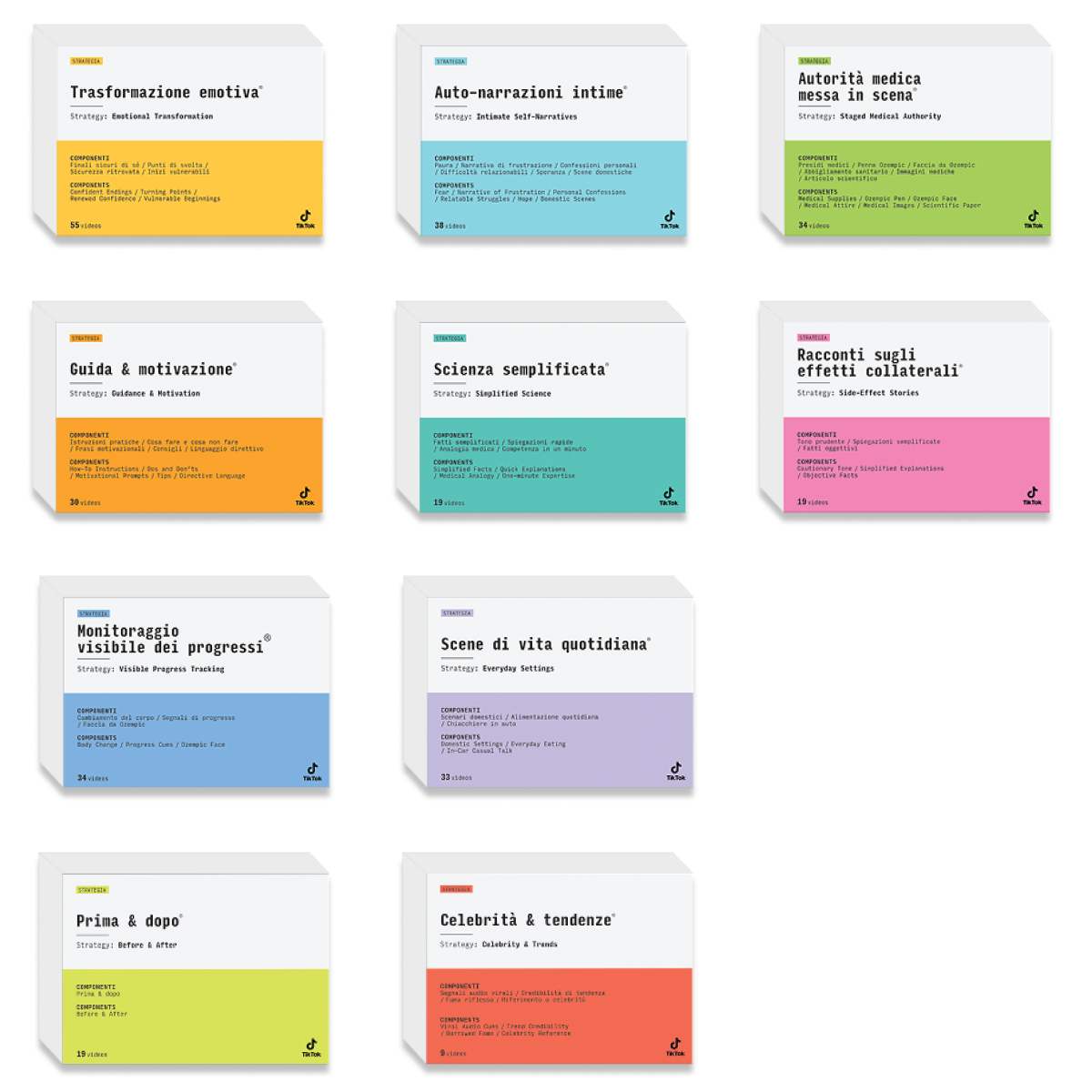
The artifact consists of ten explorable medicine-style boxes, each corresponding to a specific credibility strategy performed by creators on TikTok. Inside each box, fold-out cards collect transcribed speech, visual frames, engagement metrics, and strategy indicators derived from the analyzed videos.
The dataset includes around 160 publicly available U.S.-based TikTok videos, collected between 2024 and 2025 through seven Ozempic-related search queries. Videos were ranked by engagement, and the top 100 were selected for in-depth analysis.
Data operations included frame-by-frame visual analysis, verbatim transcription, sentence-level linguistic coding, and multi-dimensional classification. Visual elements (settings, objects, emotional performance) and linguistic features (themes, narrative modes, tone, credibility type) were first analyzed separately and then remixed to identify ten integrated credibility-performing strategies.
The installation presents a selection of evidence cards from the 100 videos, organized by strategy rather than chronology. The focus is on how visual cues and language combine to perform medical authority and lived experience, influencing how audiences evaluate trust in short-form health content.
The exhibition artifact is the result of a multi-step process: data collection, transformation, classification, and visual translation. TikTok was chosen for its central role in contemporary health discourse and for its short-video format, which intensifies performances of trust, expertise, and transformation.
Using Apify TikTok Scraper, multiple scraping rounds were run with seven carefully designed queries, including clinical terms (“GLP1”, “Semaglutide”), lifestyle frames (“Ozempic Journey”, “Ozempic Weightloss”), side-effect narratives (“Ozempic Face”), and brand names (“Ozempic”, “Mounjaro”, “Wegovy”). This produced a corpus of about 160 videos.
From this corpus, videos were ranked using engagement metrics such as views and likes, used as proxies for cultural relevance. The top 100 were selected for qualitative analysis. The methodology then split into two parallel streams: visual and linguistic credibility analysis.
Visual stream
In the visual stream, each video was viewed repeatedly and analyzed frame by frame. We systematically documented: settings (clinical spaces, domestic interiors, public or hybrid environments), objects and symbols (medical devices, pharmaceutical packaging, professional clothing, everyday outfits), narrative structures (before/after, progress tracking, instructional demonstrations, emotional storytelling), and emotional performance (confidence, vulnerability, humor, authority). Through iterative comparison, nine recurring visual categories emerged.
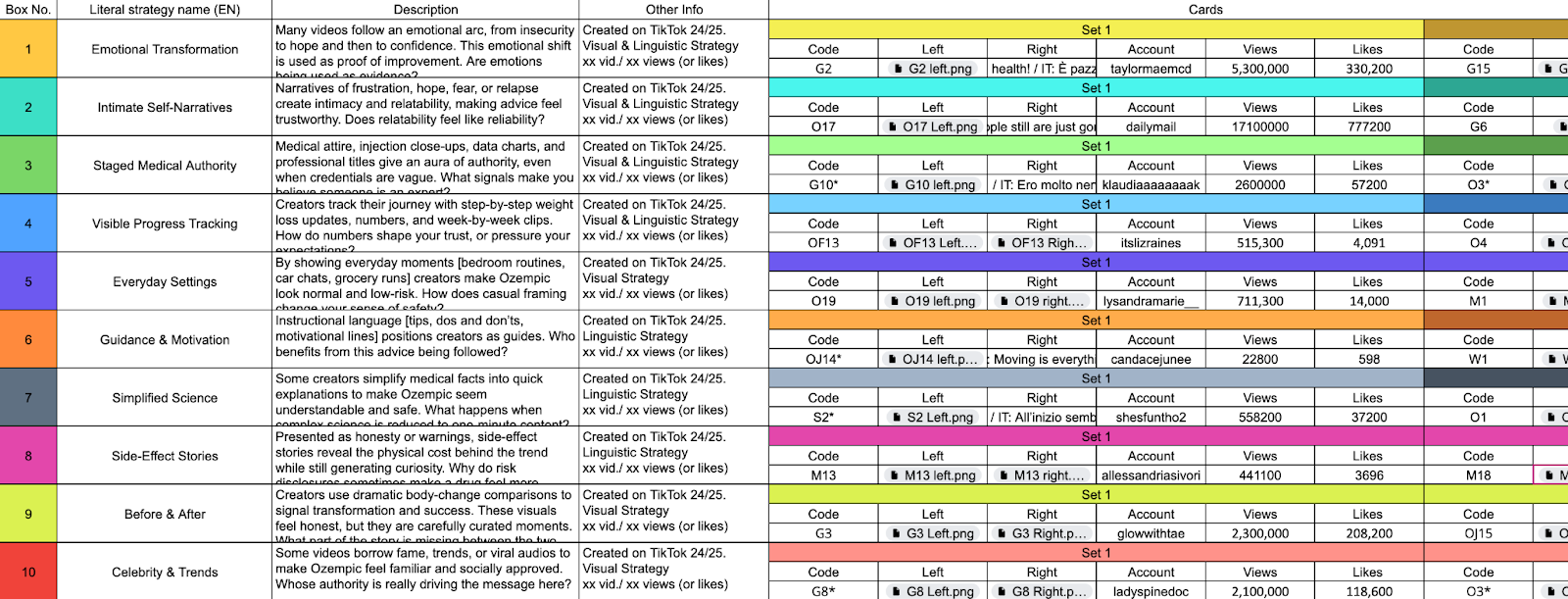
Comparative map of the 10 TikTok credibility strategies.
Linguistic stream
In the linguistic stream, all videos containing spoken narration were transcribed, while videos based only on background music or on-screen text were excluded. Transcriptions were generated during scraping through Apify TikTok Scraper, which extracts speech-to-text transcripts when available in video metadata.
All transcripts were then normalized for readability. Here, “normalization” does not mean rewriting or interpretation, but minimal linguistic cleanup to make texts readable and comparable across videos.
Normalization included spelling, punctuation, spacing, and sentence-splitting corrections, while preserving original lexicon, sequence, tone, colloquial expressions, and spoken style.
This phase was carried out using ChatGPT with a fixed prompt designed to avoid semantic or stylistic alteration.
From normalized transcripts, short quotes were manually selected where credibility was actively performed rather than merely mentioned. These excerpts were coded along four analytical dimensions: theme (14 categories), narrative cluster (5 categories), linguistic tone (23 indicators), and credibility type (4 performative modes).
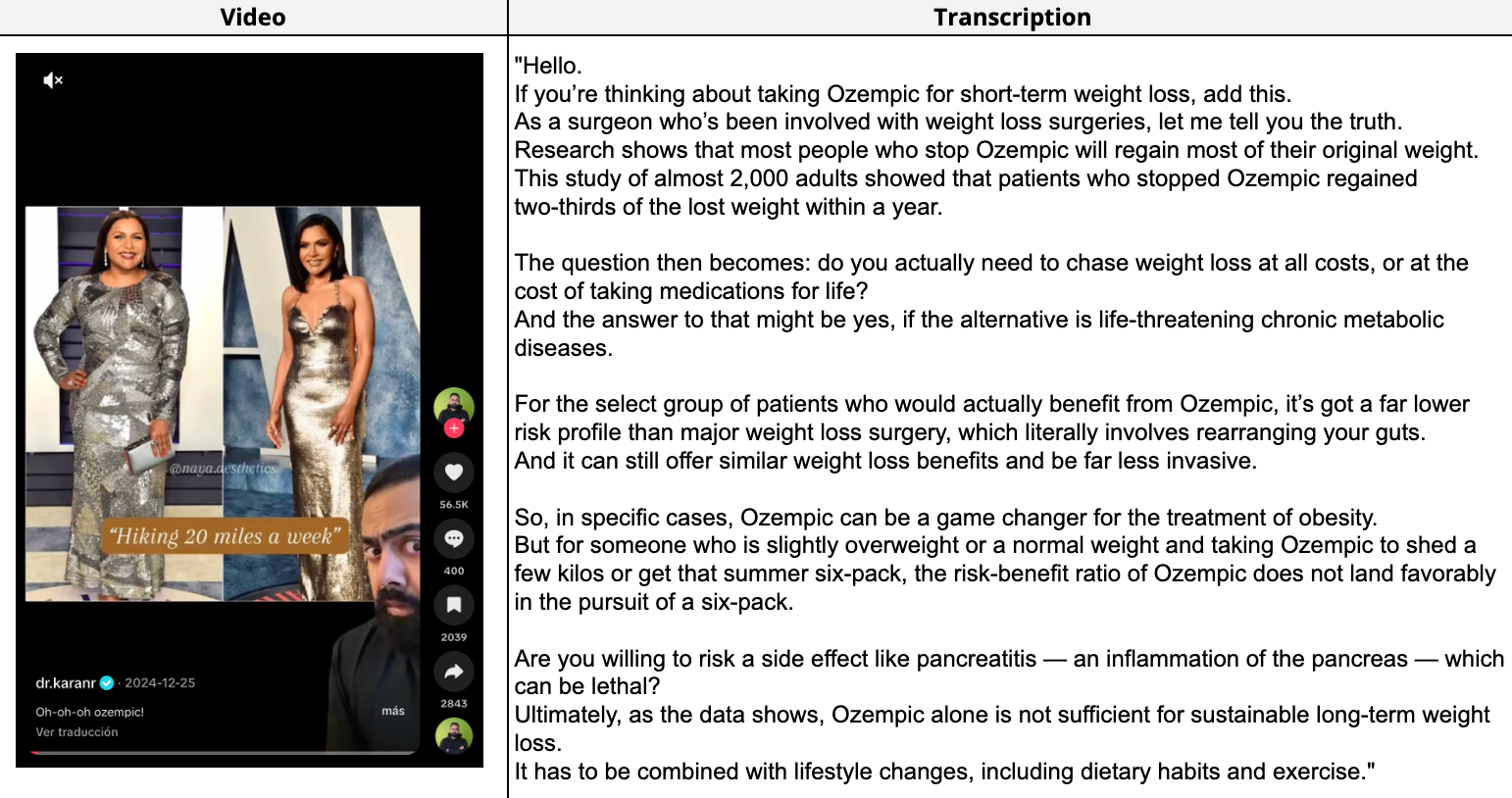
Evidence card pairing a TikTok frame with its transcript, illustrating how clinical language and visual authority markers combine in platform-native credibility performance.
The crucial methodological step was remixing these two analytical streams. Instead of presenting visual and linguistic categories separately, we examined how specific combinations of imagery, settings, tones, and themes systematically recurred in high-engagement videos. Through this synthesis, we identified ten overall credibility-performing strategies that integrate visual and linguistic elements into coherent performances.
| Credibility strategy | Dominant visuals | Typical settings | Linguistic tone | Main themes |
|---|---|---|---|---|
| Emotional transformation | Facial expressions, body reveal | Bedroom, mirror | Emotional, relieved | Confidence, self-esteem |
| Everyday life scenes | Casual selfies, handheld shots | Home, car, daily spaces | Conversational, informal | Daily life, normality |
| Before & after | Body comparison frames | Bathroom, home | Assertive, validating | Weight-loss results |
| Intimate self-narratives | Talking head close-up | Bedroom, car | Confessional, vulnerable | Personal experience |
| Guidance & motivation | Pointing gestures, direct address | Home | Encouraging, advisory | Tips, encouragement |
| Staged medical authority | Lab coats, medical props | Clinics, offices | Authoritative, reassuring | Safety, legitimacy |
| Simplified science | Charts, explanations, objects | Neutral interiors | Explanatory, didactic | How Ozempic works |
| Celebrity & trends | Celebrity clips, trend formats | Media/screens | Playful, referential | Fame, social proof |
| Visible progress tracking | Temporal clips, repeated shots | Home | Reflective, incremental | Ongoing change |
| Side-effect narratives | Body details, tired faces | Bedroom | Direct, anxious | Risks, symptoms |
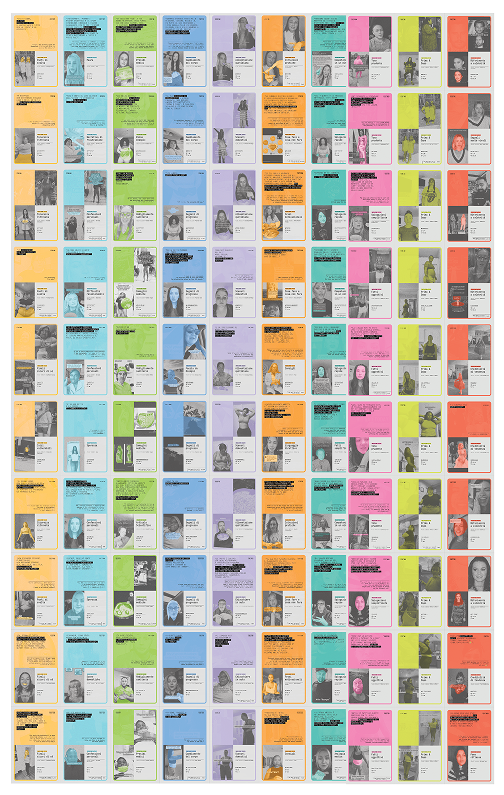
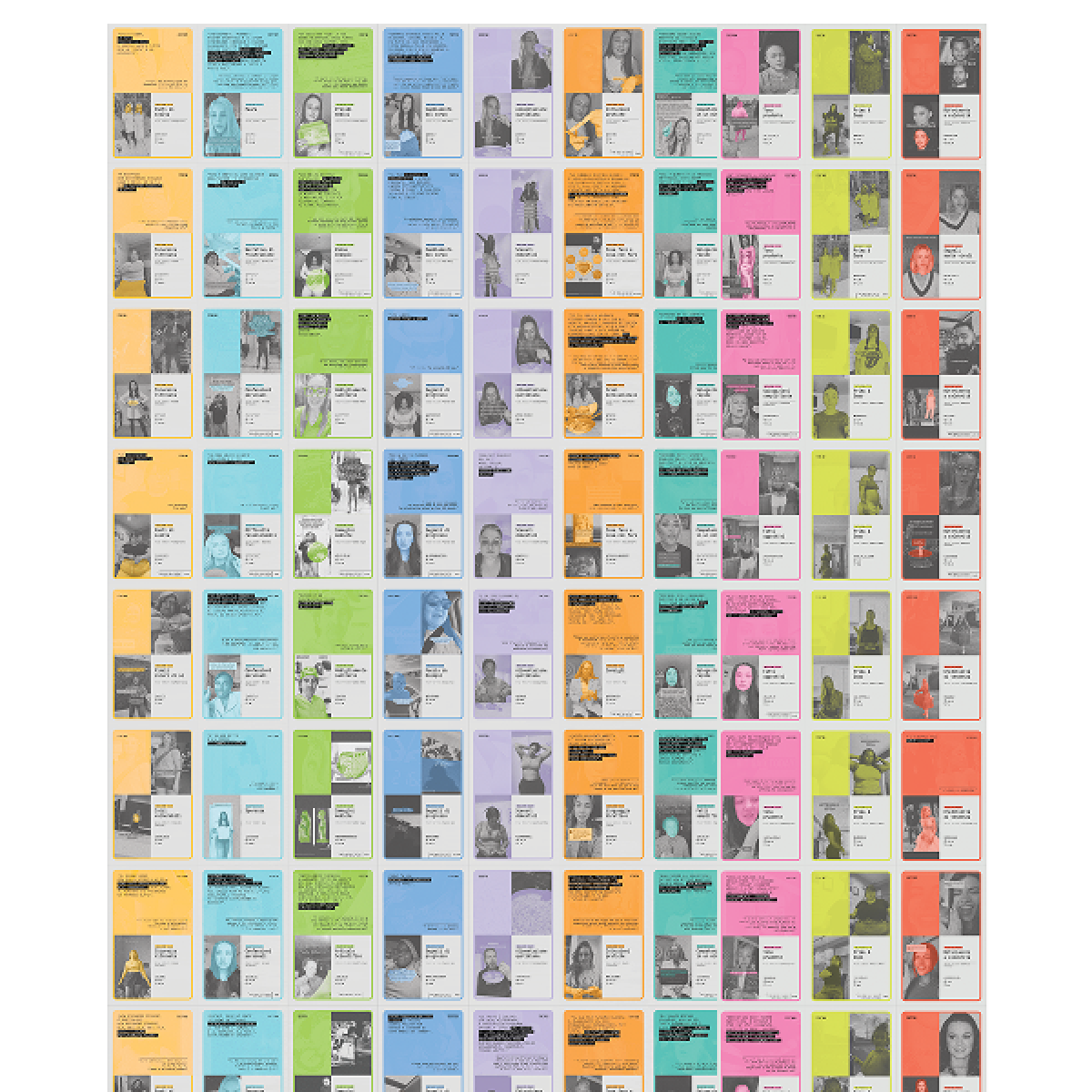
Open cards arranged to highlight recurring credibility patterns across creators and narrative formats.
The final installation translates these strategies into a physical, explorable format. Ten medicine-style boxes echo the clinical aesthetics often adopted by creators themselves. Inside, fold-out cards present frames from the 100 analyzed videos, including transcripts, representative images, strategy labels, and engagement metrics. Cards are designed for active handling, reflecting TikTok’s incremental reveal logic and encouraging visitors to reflect on their own judgment processes.
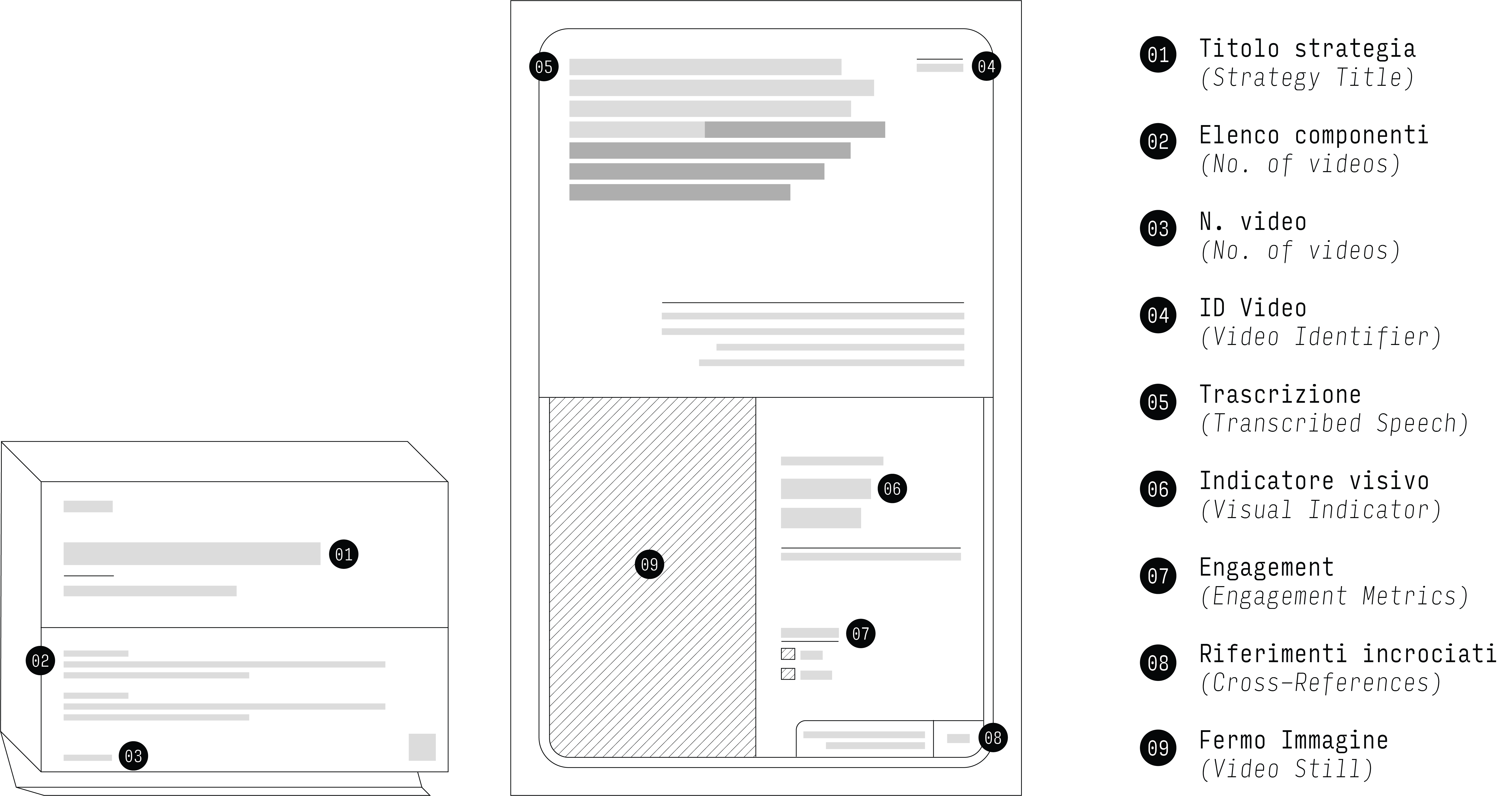
Visual breakdown of a strategy box and analysis card, showing how each content component is structured, indexed, and interpreted.
The installation makes credibility performances visible and open to critique, allowing visitors to examine how pharmaceutical authority in Ozempic TikTok content is constructed, circulated, and validated outside traditional systems of medical verification.


