
How gymbros use strength to discuss politics

The catalogue republishes 54 gymbro videos in TikTok discussing politics in a gym context, with a focus on the visual and textual grammar of strength used by both left and right leaning users when engaging with political content. For this purpose, the videos were separated into textual and visual components, creating a catalogue with two sections that can be leafed through separately. This structure thus highlights the discrepancy between political text messages and gym-related visuals.
Texts are taken from audio transcripts, captions, and on-screen text, choosing the one that best represents the video’s content. Then, words signalling strength through either "bragging" or “offense" were highlighted in different colors. The same highlighting process was done with visuals, identifying recurring elements as “flexing”, “working out”, “facial expression” and “being shirtless”.
The data
The project explores gymbros’ tendency to fetishize strength, highlighting how that seeps in the political debate regardless of users’ political leaning. Showing off their bodies and lifting weights becomes a communicative strategy to discuss political matters.
The research focused on TikTok as the primary platform where the gymbro phenomenon emerged and became a trend. To build the dataset, the scraper Apify has been used to collect a total of 438 videos, which contained at least one hashtag related to politics and one related to the gym environment.
The videos were organized in decreasing order according to the number of likes, then manually classified based on their political leaning, in line with explicit political references in visual elements or texts (e.g. a red MAGA hat; “being a liberal and [...]”).

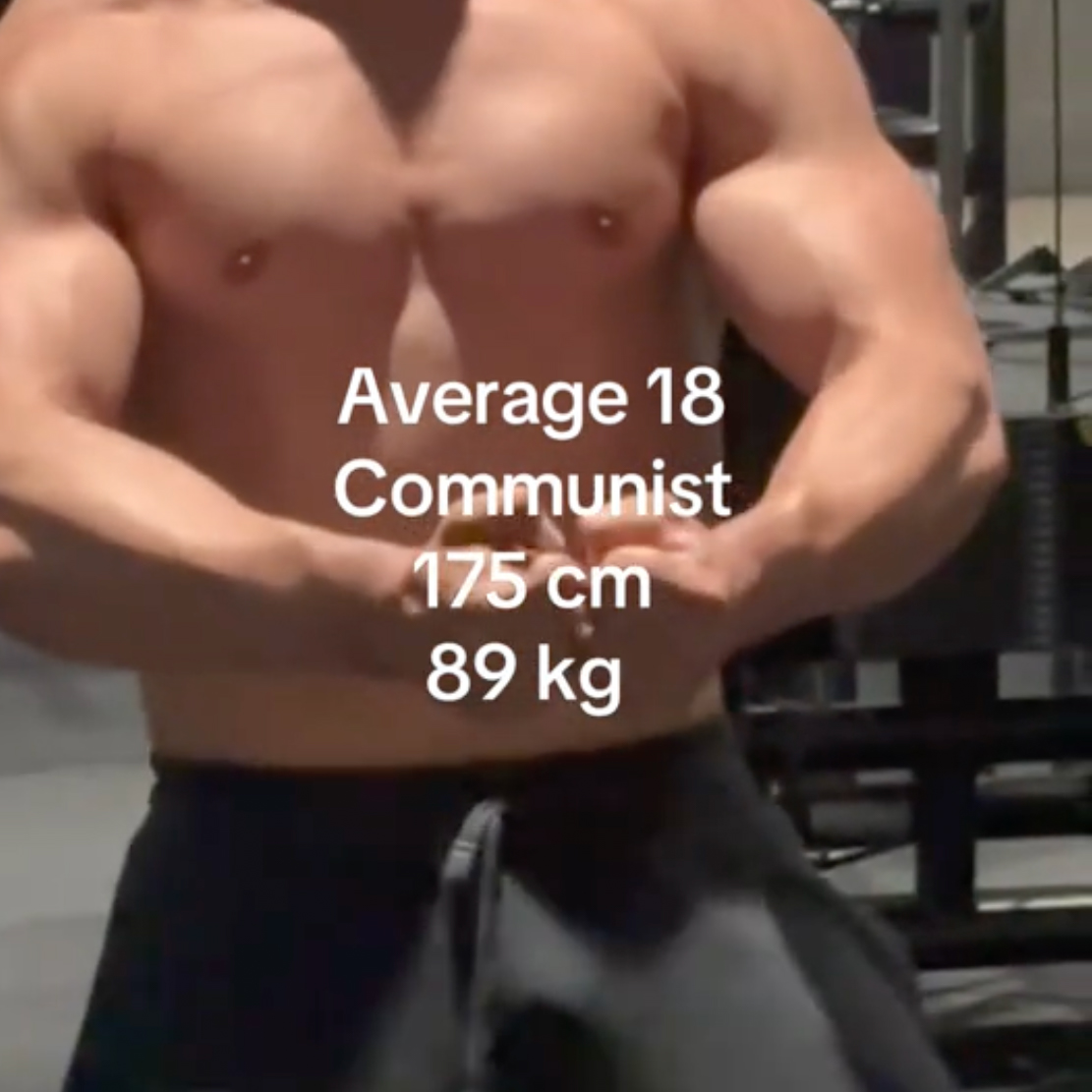
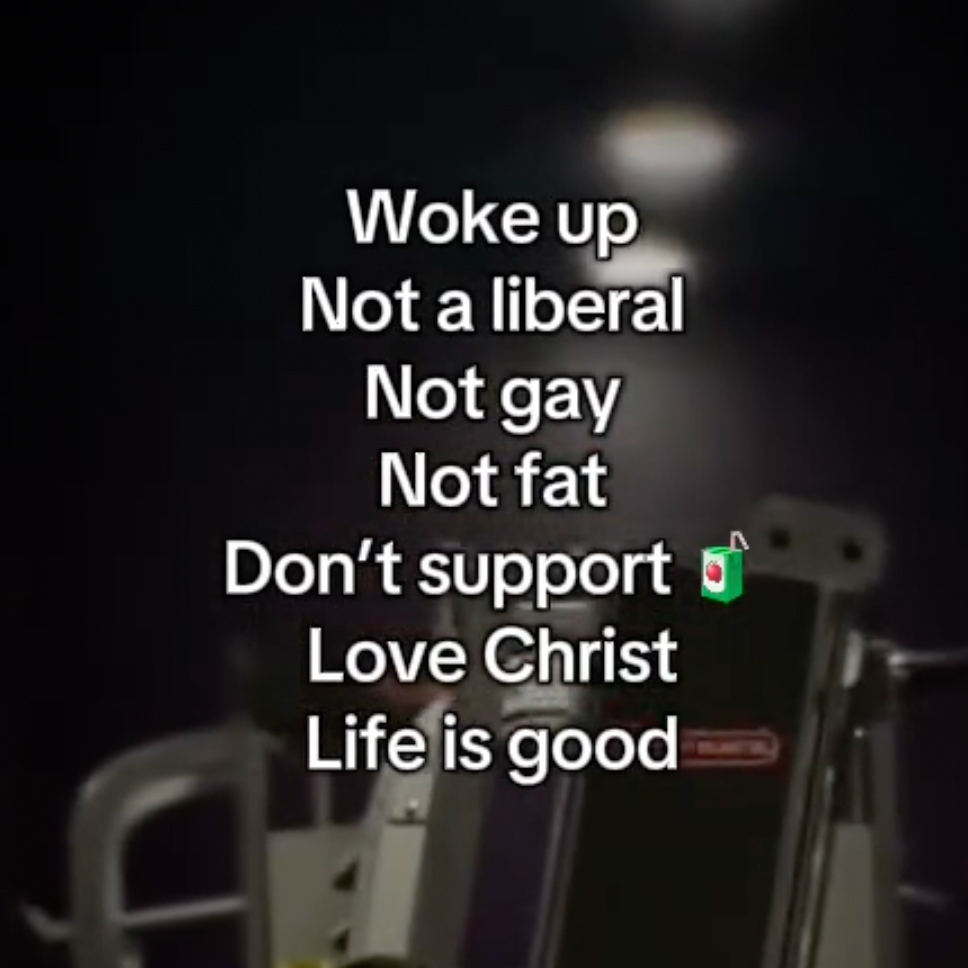
Examples of visual elements or ideological texts used to identify political leaning.
The 28 most popular videos from the right and left political side were selected, with just two videos excluded due to their creators being under-aged. The resulting sample of 54 videos formed the basis for the development of the catalogue Pumping Politics: How Gymbros Use Strength in Political Discourse.
In the videos, there is often a complete mismatch between what is being said and what is being shown: while the text usually contains highly impactful political statements, the visuals focus on physical strength and muscles.
The core manipulation of the data involved deconstructing each TikTok video into a textual and a visual layer, which were then arranged in a catalogue with texts on the left and visuals on the right, enabling an independent flipping through the different sections.
The catalogue
The catalogue not only emphasizes the mismatch between text and visuals, but also exposes the recurring patterns of strength within them.
In the texts, strength is expressed through bragging or offense. The bragging category involves words used to boast oneself up, often by pointing out achievements in the gym. Offense includes words used to bring down others, whether it being through direct insults or mockery. In the catalogue, these expressions are visually marked in yellow for bragging and in green for offense, as shown in the following scheme.
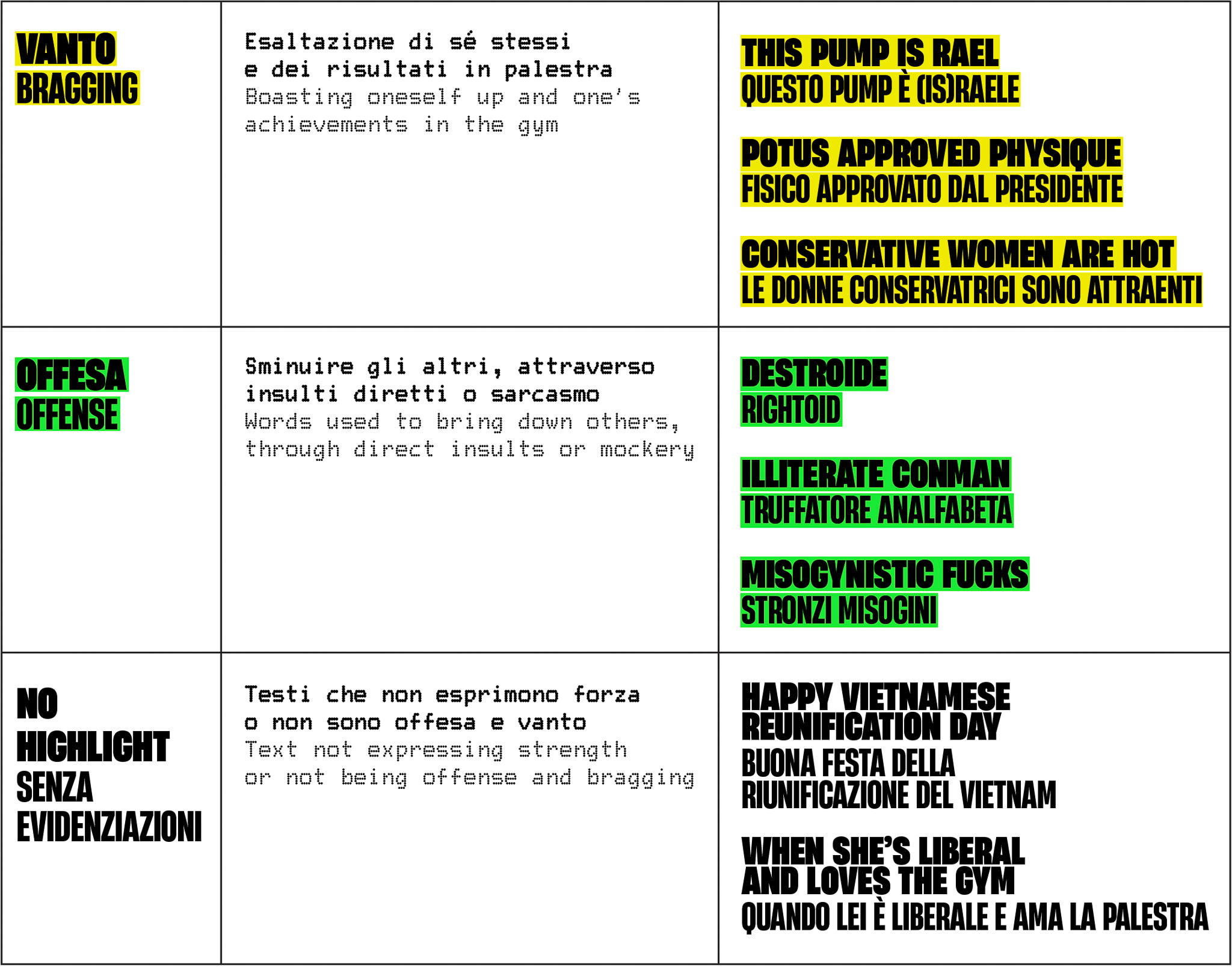
Categories used to classify strength expressed through text and relative examples.
These categories have been used to organize the texts in decreasing order of intensity: first of all there are the ones classified as most offensive, as direct attacks on other individuals and minorities being considered greater manifestations of strength, then the ones with the “bragging” highlight, and finally texts with no highlights.
For the visuals, the recurring elements that express physical strength are highlighted with a box and categorized into “expression”, “flexing”, “working out” and “shirtless” as follows:
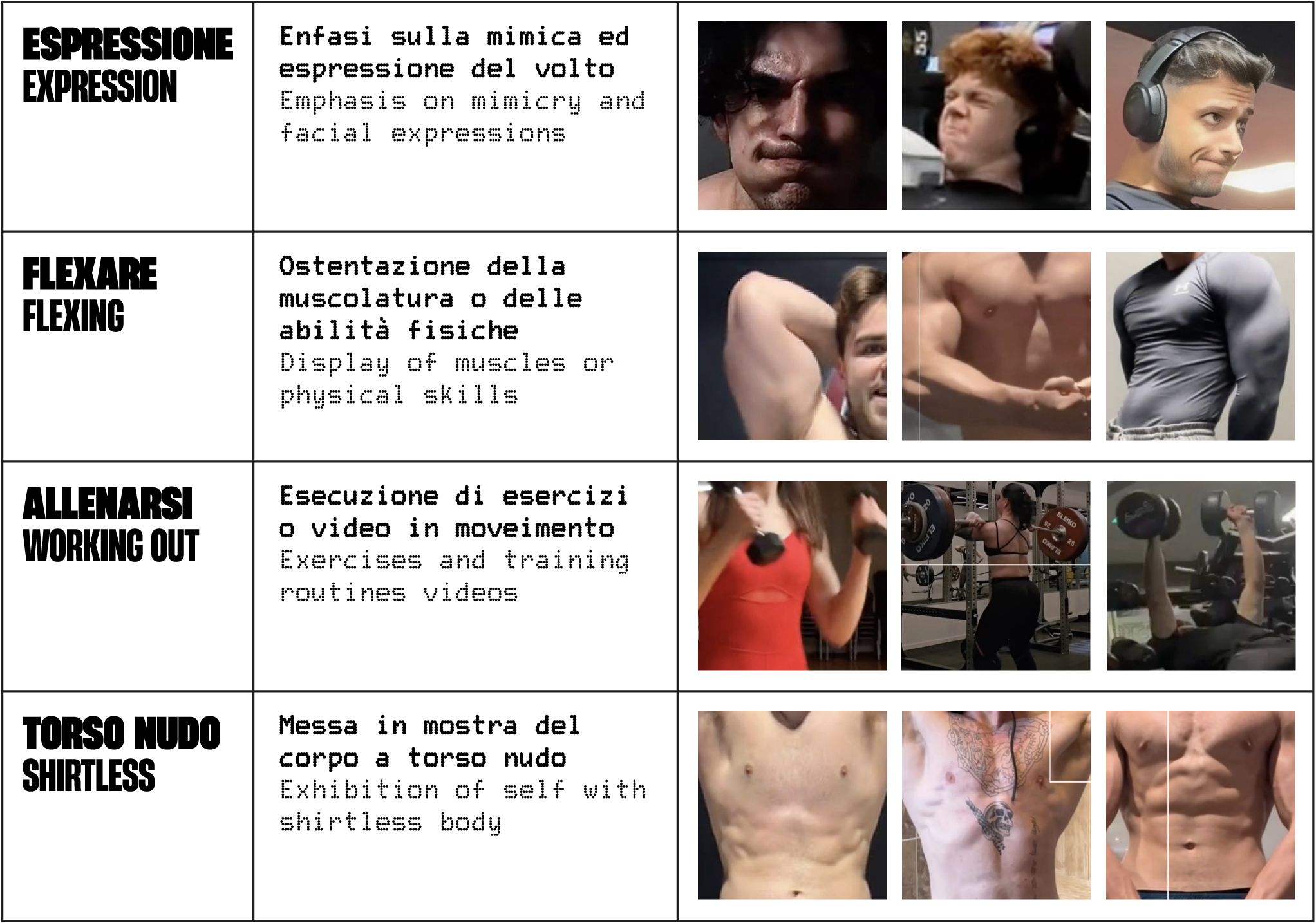
Categories used to classify strength expressed through visuals and relative examples.
Then in the catalogue these visual contents have been sorted according to the decreasing number of highlighted elements expressing strength.
Metadata such as views, likes and a video ID number have been included in the top side of each page of the catalogue, serving the dual purpose of matching the original text with its visual and contextualizing the content through its metrics.
In addition, a colored stripe at the bottom of each page (red for left-leaning and blue for right-leaning) indicates the political inclination of the video content.
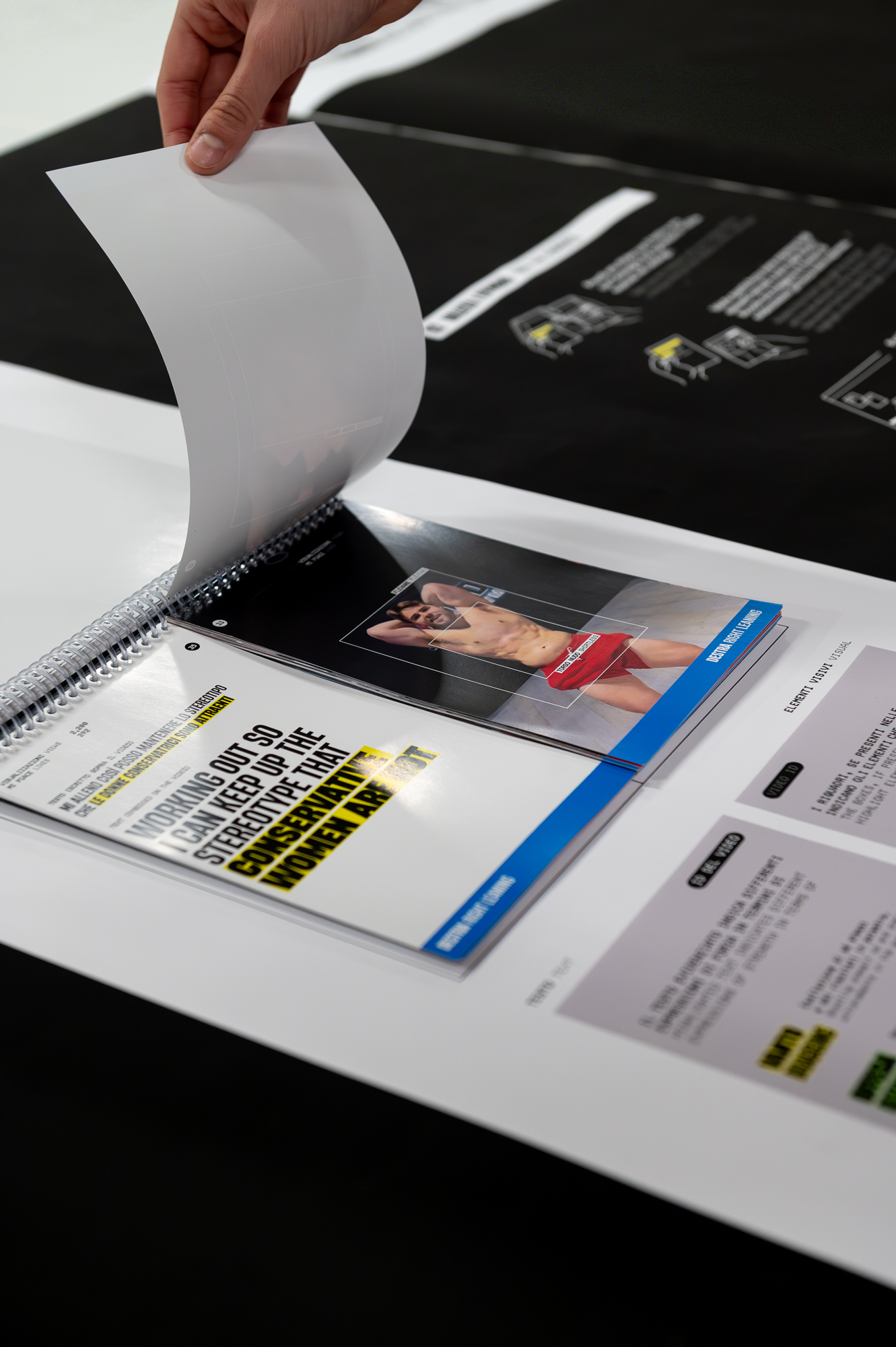
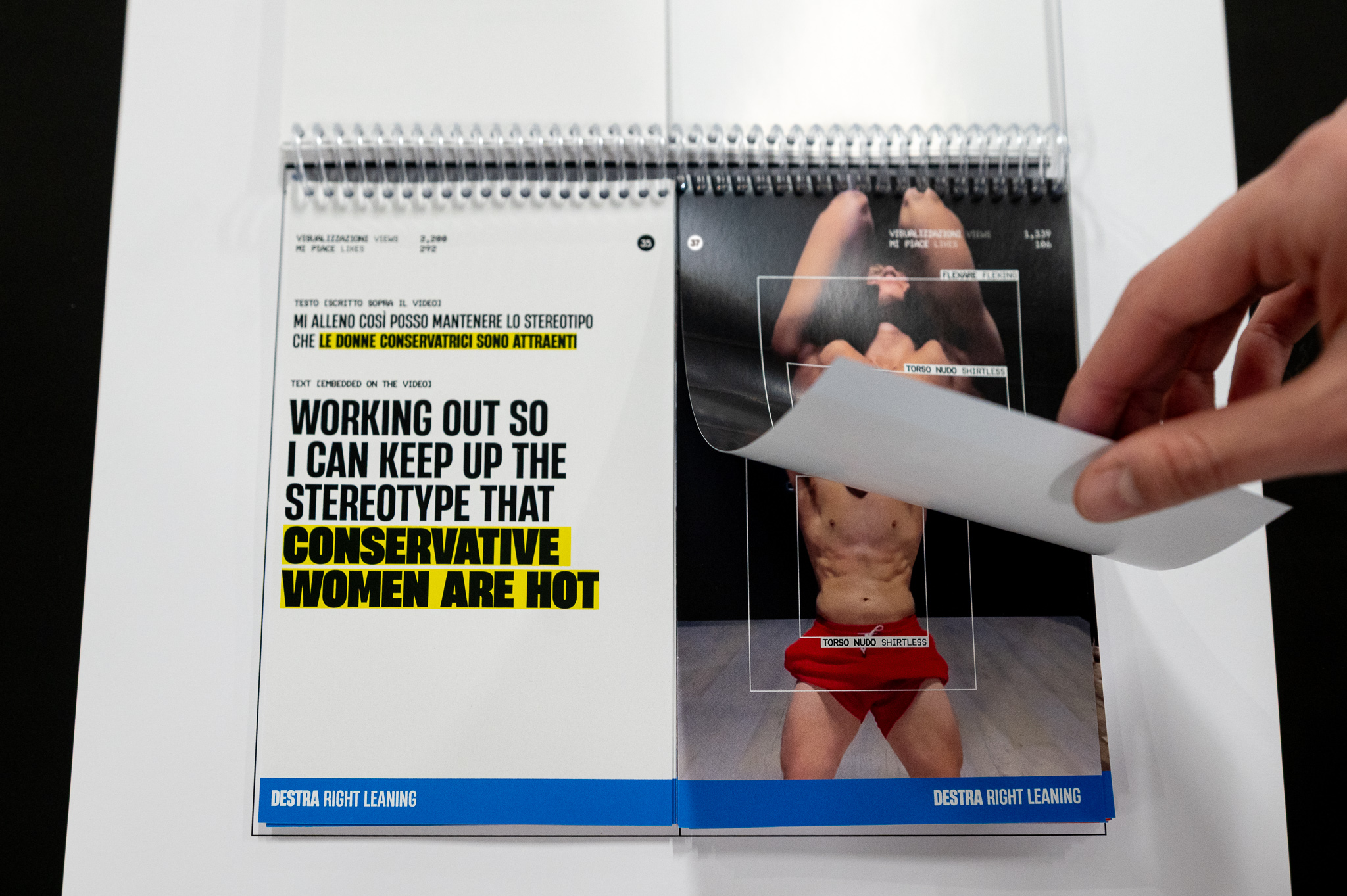
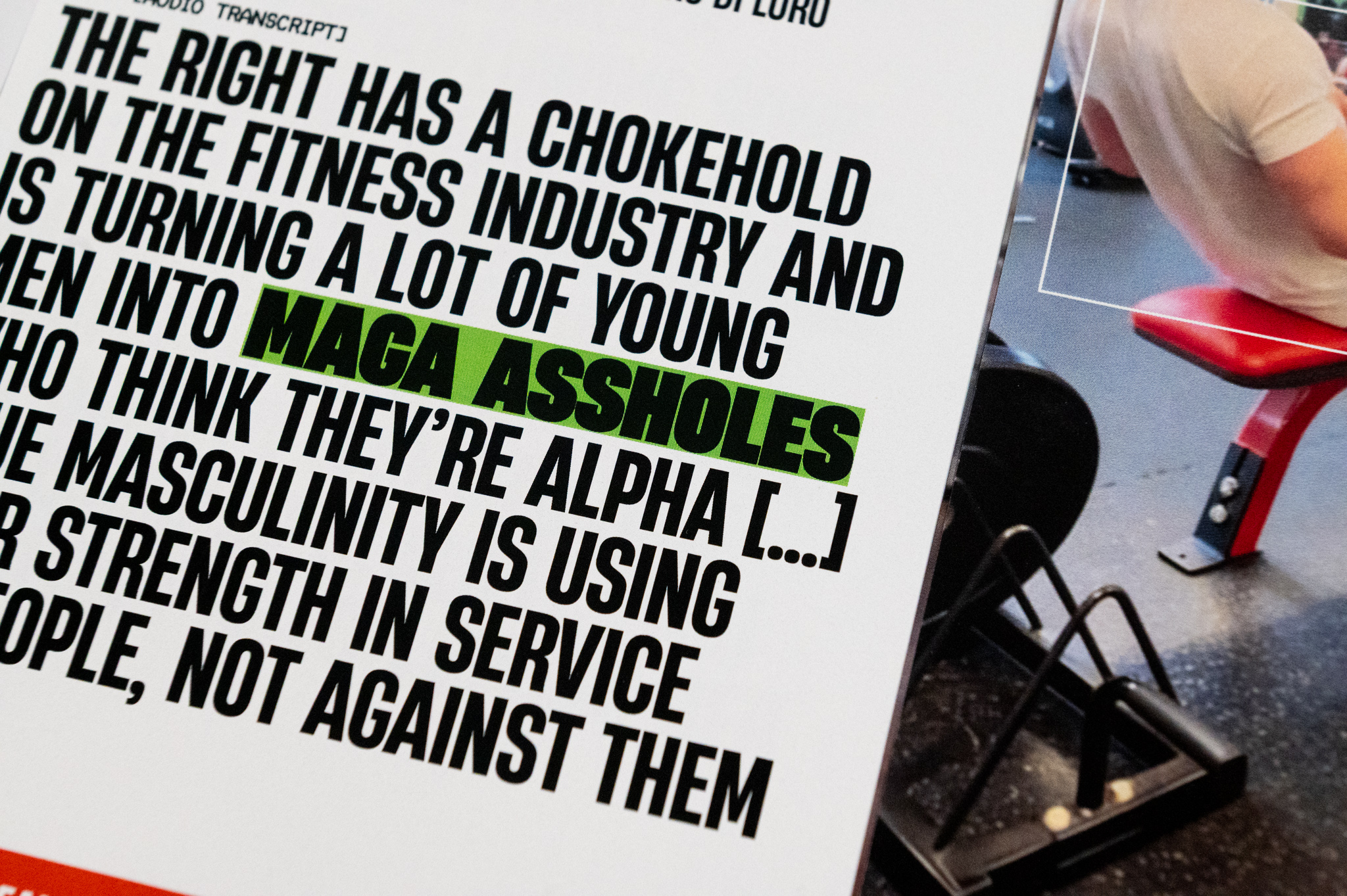
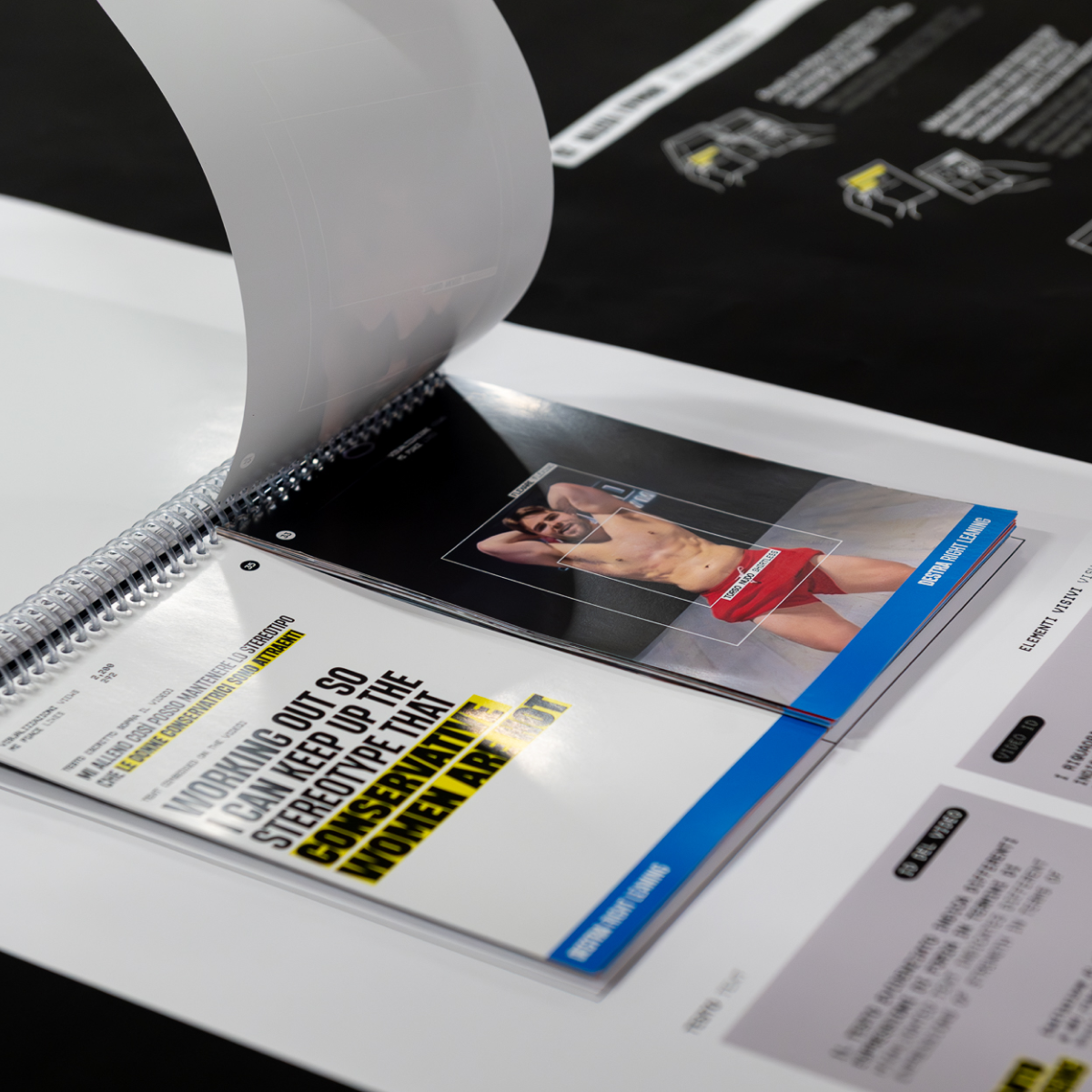
Example of internal pages: texts usually discussing politics on the left and visuals typically showing muscles on the right.
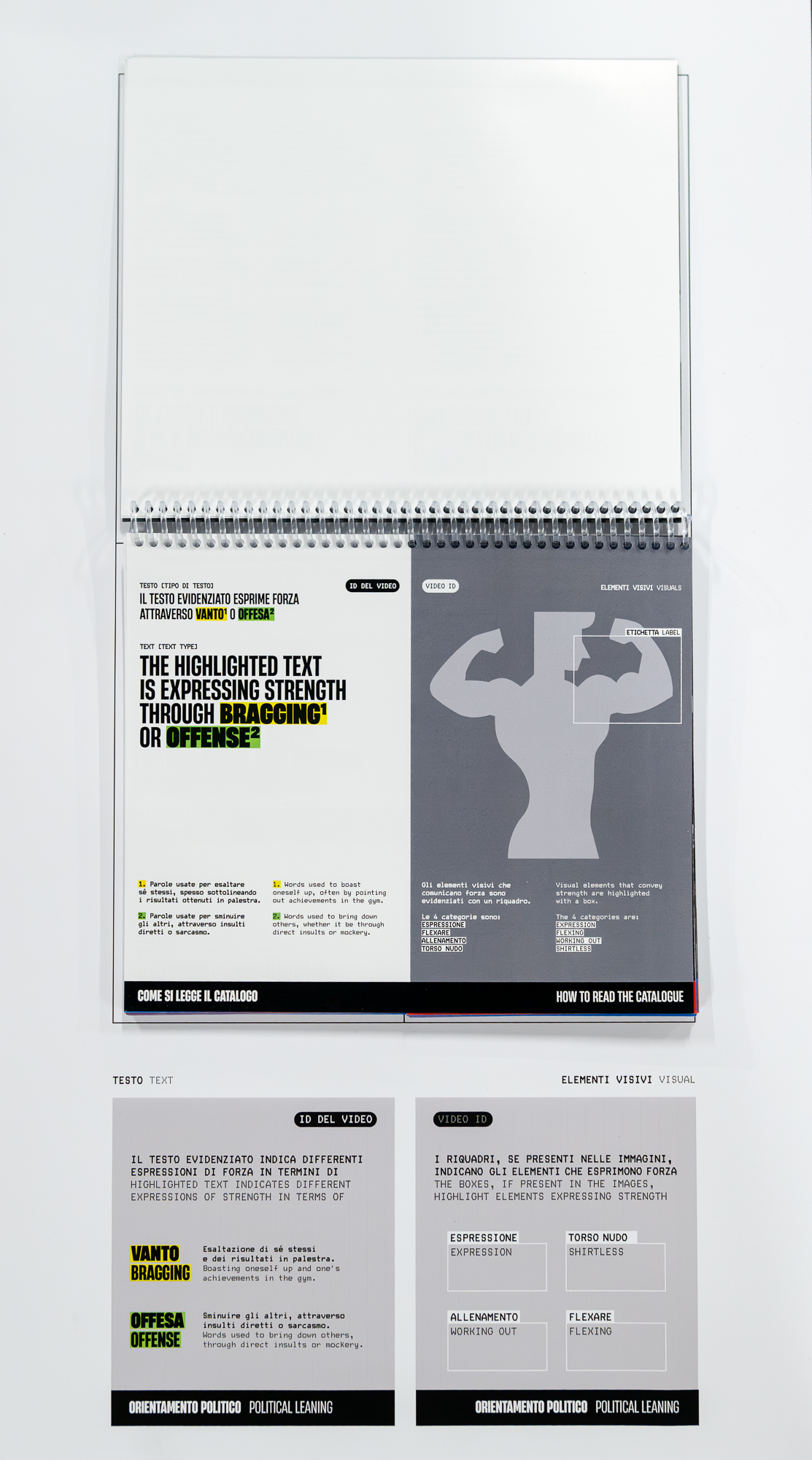
The catalogue with the legend for the textual and visual analysis.
Drawing from the videos’ focus on the body, the project adopts the visual language of gym magazines, using bold typography and an illustration with dramatic lighting designed to highlight the musculature. This can be seen both on the cover of the catalogue and in the overall exhibition arrangement.
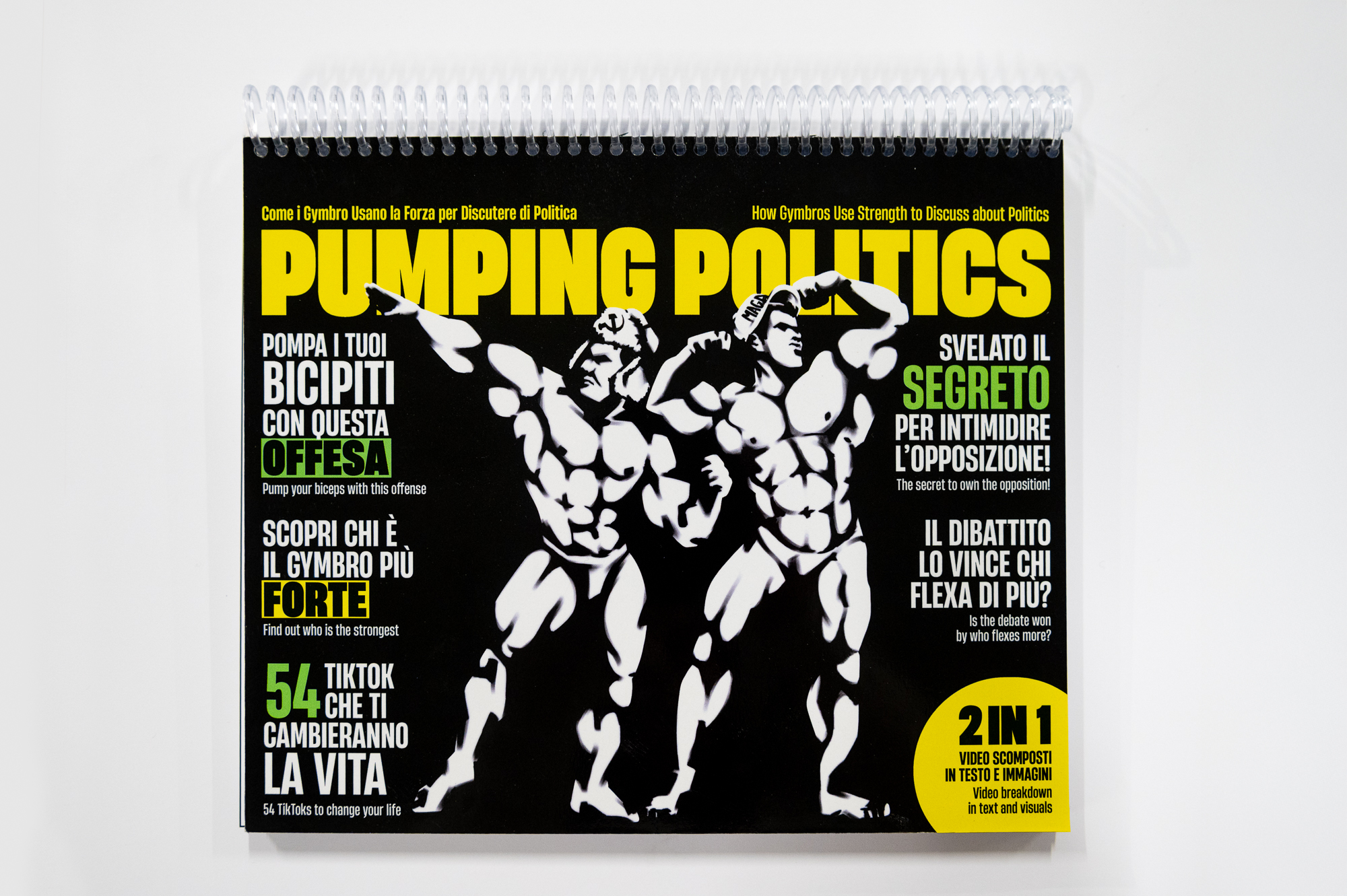
Cover of the catalogue, inspired by the visual language of gym magazines.
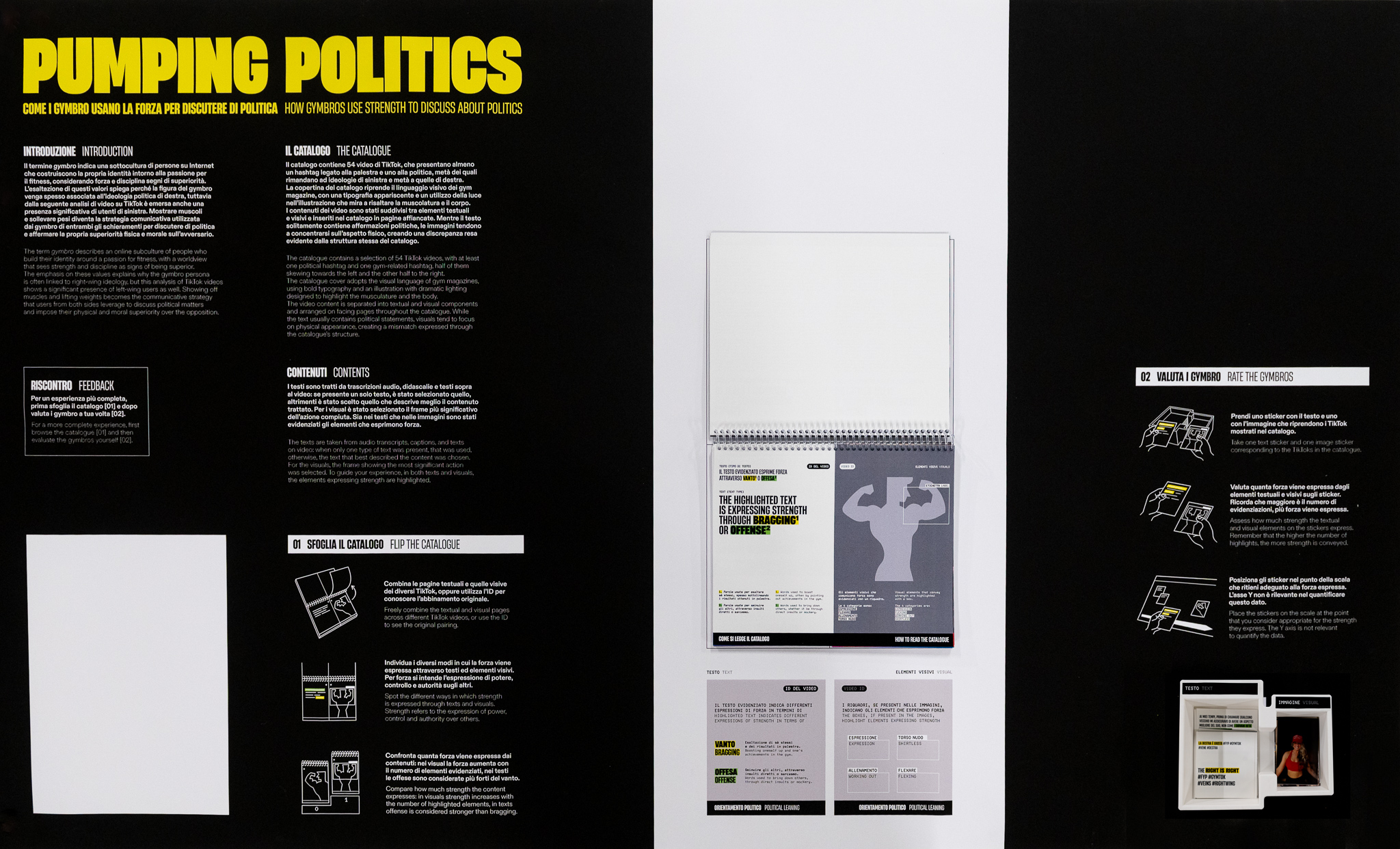
First exhibition table with the catalogue and relative instructions.
The evaluation method
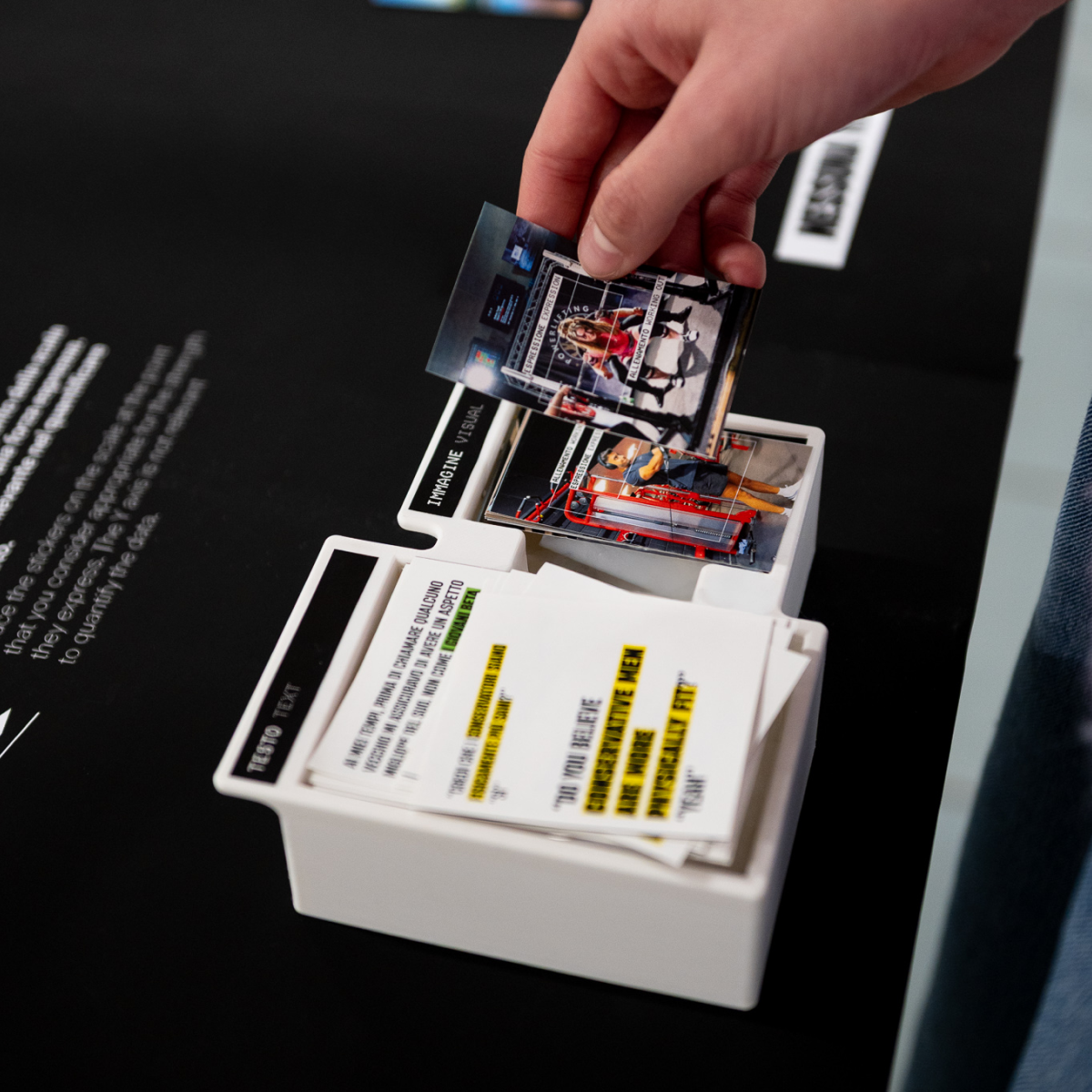
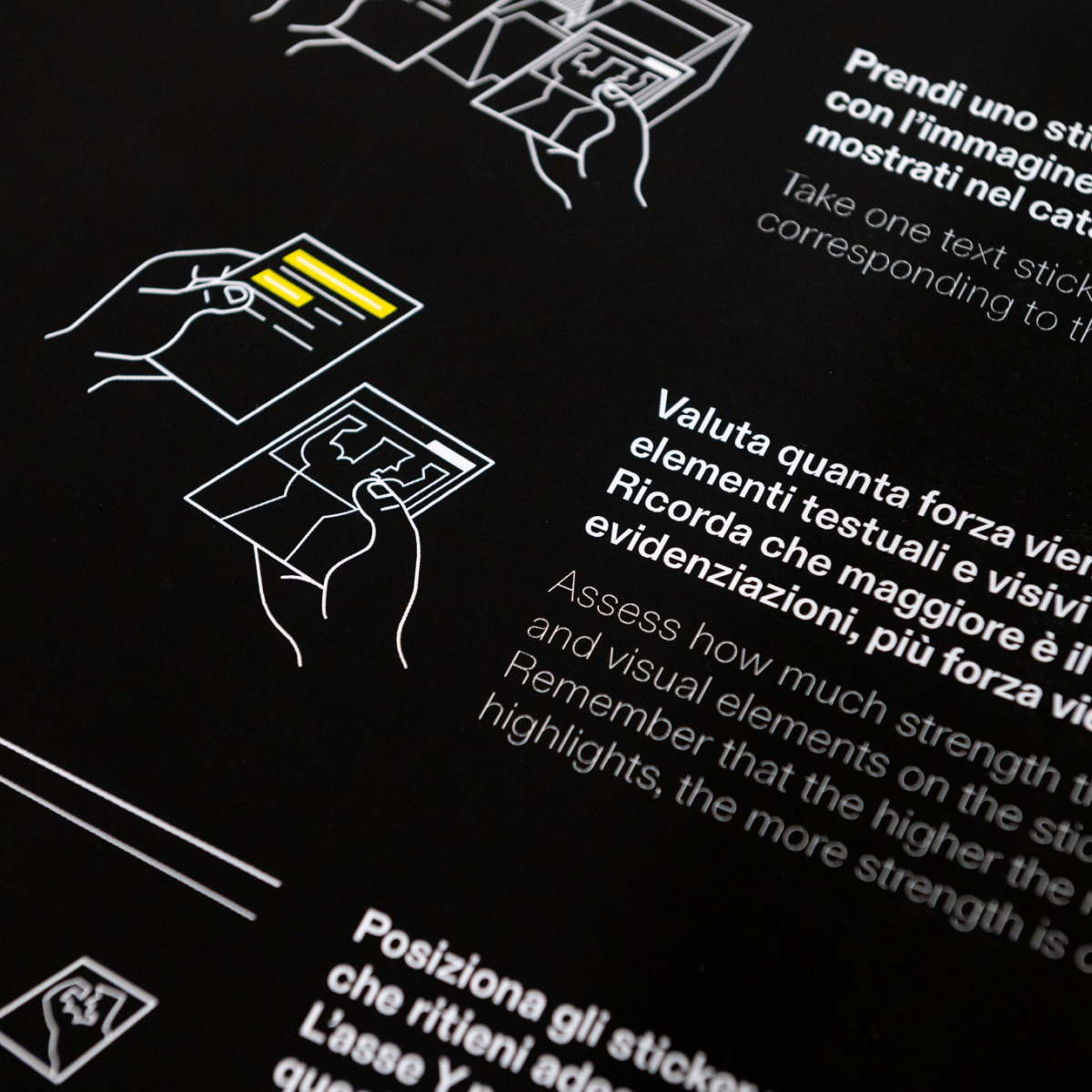
While the first part of the exhibition is meant for the catalogue display, the second one is dedicated to the evaluation method. The goal is to assess whether visitors understood the project’s main communication goal by asking them to rate the strength of TikTok texts and visuals, placing stickers along a scale guided by the highlighted cues introduced in the catalogue.
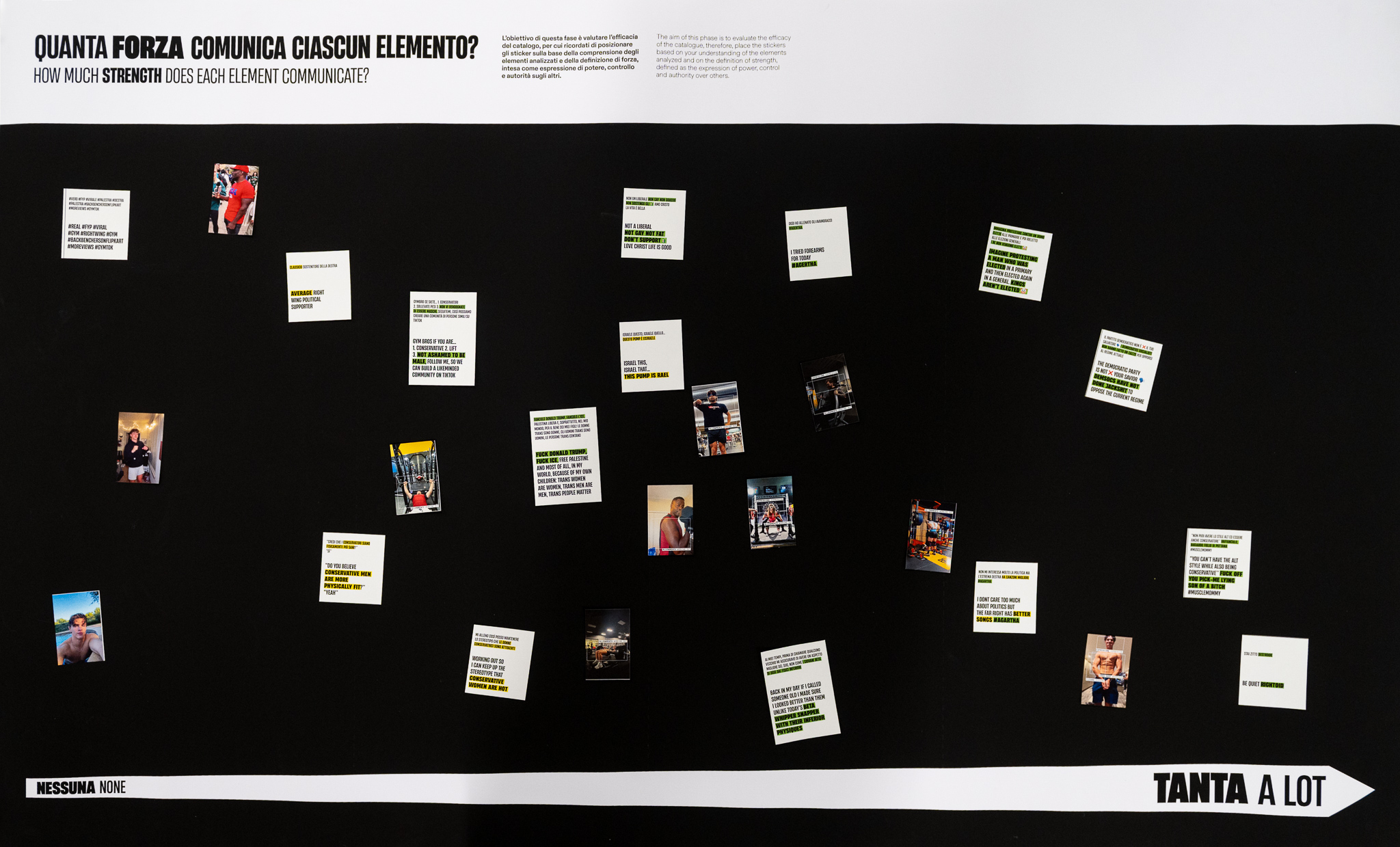
Second exhibition table with the evaluation method.
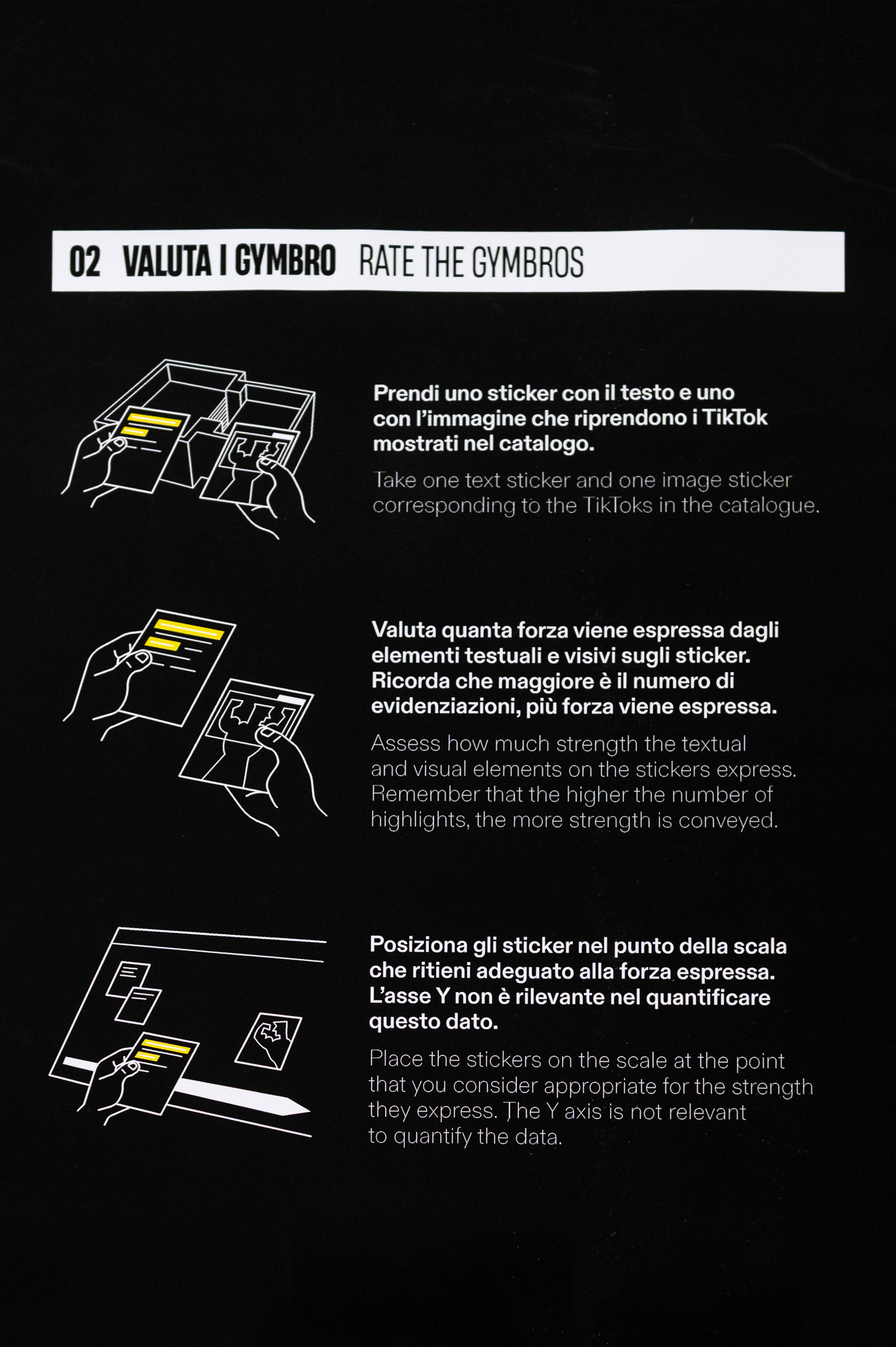
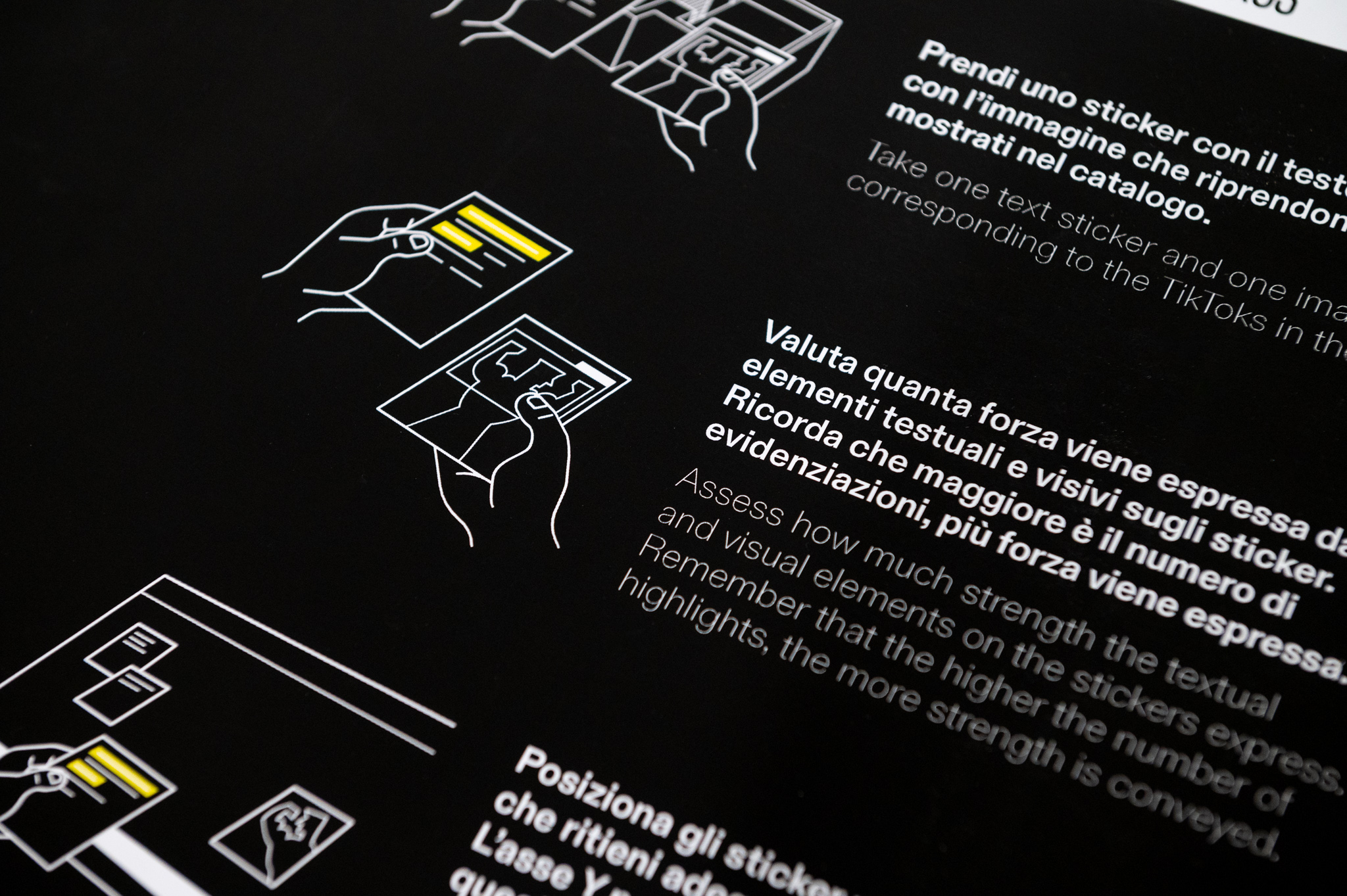
Evaluation method instructions on the table.
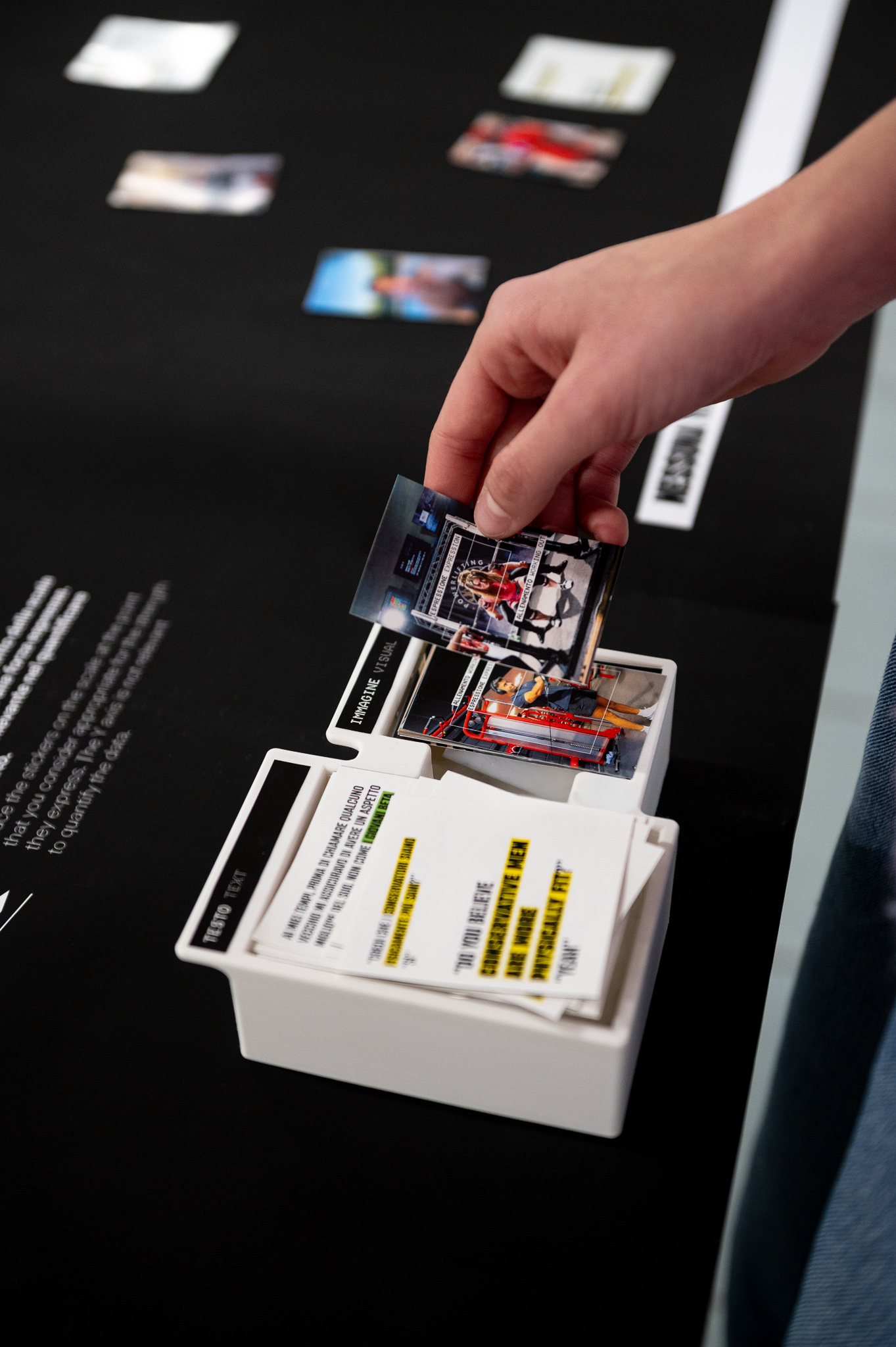
Evaluation stickers (texts and visuals).


